
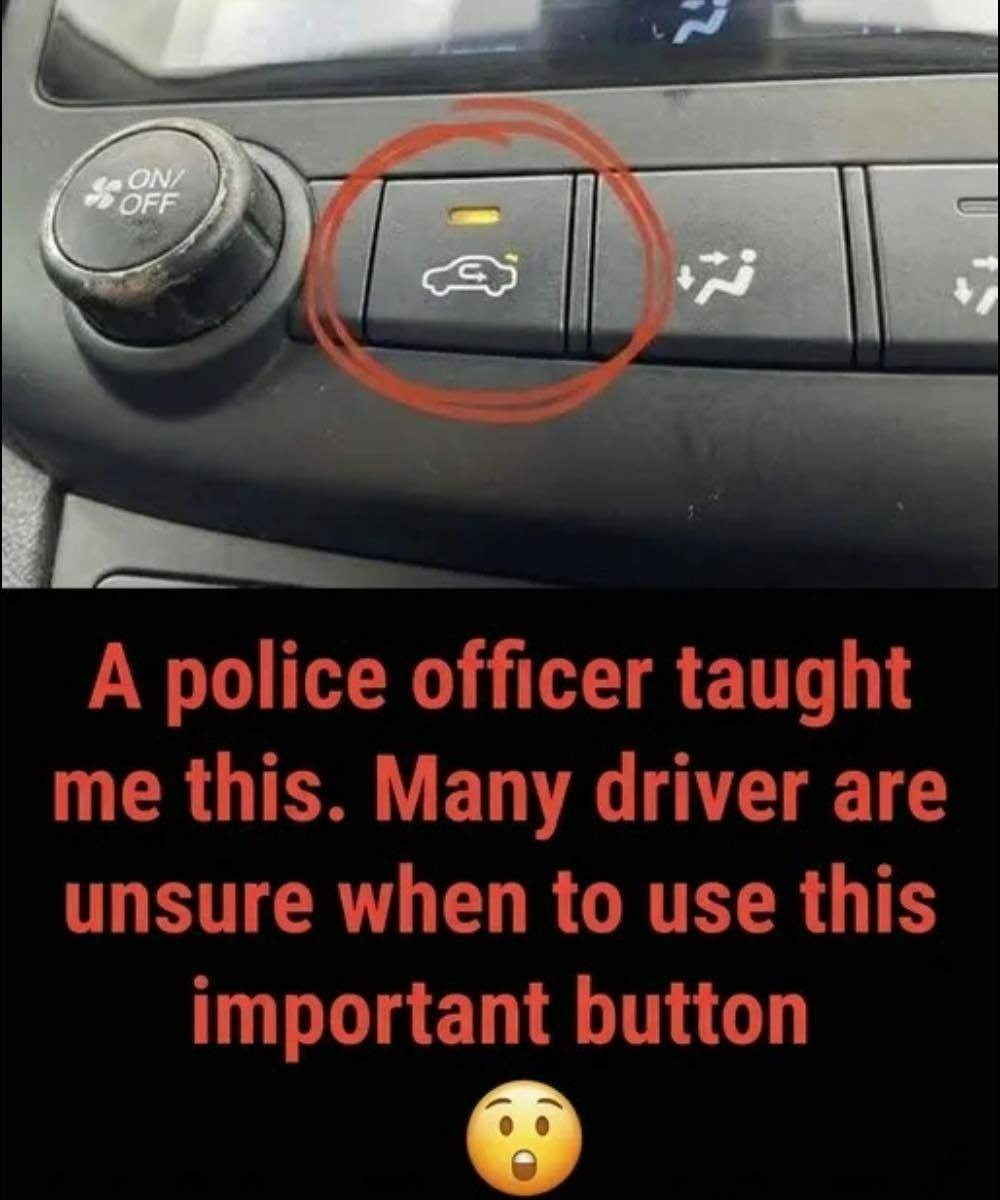
This is the most common and most useful application.
When you first get into a car that’s been baking in the sun, the interior air is superheated—sometimes 130-150°F. Your AC has to work incredibly hard to cool that hot air down.
If you start with recirculation mode OFF, the system is pulling in 100°F outside air and trying to cool it. That’s inefficient and slow.
If you turn recirculation mode ON, the system is pulling in 80°F cabin air (which is already partially cooled) and cooling it further. Each pass through the system gets cooler and cooler, like a feedback loop.
The result: Your car cools down significantly faster. On a 95°F day, using recirculation can cut your cool-down time in half.
Pro tip: When you first get in a hot car, roll down the windows for 30 seconds to blast out the hottest air. Then close the windows and turn on recirculation with max AC. You’ll be comfortable in minutes instead of languishing for the whole drive.
2. Stop-and-Go Traffic – Avoid Exhaust Fumes
This is the situation that converted me.
When you’re stuck in heavy traffic, you’re surrounded by dozens (or hundreds) of other cars, all pumping out exhaust. Carbon monoxide, nitrogen oxides, particulate matter—none of it is something you want to breathe.
With fresh air mode on, you’re pulling that exhaust directly into your cabin. It might not be enough to make you sick immediately, but it can cause headaches, dizziness, and eye irritation over time.
With recirculation mode on, you seal yourself off from the surrounding pollution. The air inside your cabin gradually cleans itself as it passes through the cabin filter.
The result: No more smelling the school bus in front of you. No more headaches after long commutes. Just clean, recirculated air.
3. Driving Through Dusty or Smoky Areas
Living in a dry climate? Driving past a freshly plowed farm field? Passing through an area with wildfire smoke?
You already know what to do. Flip on recirculation.
Your cabin filter can only handle so much. When the outside air is thick with dust, pollen, or smoke, fresh air mode will overwhelm your filter and fill your cabin with particulates. Recirculation mode keeps the bad stuff outside where it belongs.
The result: Less sneezing, less coughing, less cleaning of your dashboard and seats.
4. Strong Outdoor Odors (Skunks, Farms, Industrial Areas)
Sometimes the air outside just smells bad. A skunk sprayed nearby. You’re passing a cattle farm. There’s a paper mill or wastewater treatment plant upwind.
You can’t control what’s outside your car. But you can absolutely control whether it comes inside.
The result: Your car remains a pleasant-smelling sanctuary. Your passengers will thank you.
5. Maximizing AC Efficiency in Extreme Heat
Even beyond the initial cool-down, recirculation helps your AC run more efficiently during extended drives in hot weather.
Cooling already-cooled air takes less energy than cooling hot outside air. Your AC compressor doesn’t have to work as hard. Your engine doesn’t have to work as hard. You might even notice slightly better fuel economy (though the difference is small).
The result: A more efficient AC system that lasts longer and costs less to run.
When You Should NOT Use Recirculation Mode (Critical for Safety)
Here’s where things get serious. Recirculation mode is great—but using it at the wrong time can be dangerous.
1. Cold Weather – Windshield Fogging
In cold weather, the air inside your car contains moisture from your breath, wet shoes, and damp clothing. If you use recirculation mode in cold weather, that moisture has nowhere to go. It builds up inside the cabin.
The result? Your windows fog up. Badly. And fogged windows are a serious safety hazard.
The fix: In cold weather, use fresh air mode. The system pulls in drier outside air, which helps clear the windows faster. If you need to defog quickly, turn on the front defroster and fresh air mode simultaneously.
Pro tip: Some cars automatically disable recirculation when you select the defrost setting. That’s the engineers looking out for you.
2. Long Drives with Multiple Passengers – Oxygen Concerns
This one is rare, but it’s worth knowing.
In a tightly sealed car with recirculation mode on for hours, the oxygen level inside the cabin can slowly drop while carbon dioxide levels rise. With one or two people, it’s usually fine. With a full car of passengers on a long road trip, some people may experience drowsiness, headaches, or fatigue.
The solution is simple: periodically switch to fresh air mode for 10-15 minutes every hour or two. Let some outside air in, then switch back.
The result: Everyone stays alert and comfortable for the whole trip.
For Complete Cooking STEPS Please Head On Over To Next Page Or Open button (>) and don’t forget to SHARE with your Facebook friends
ADVERTISEMENT
