
3. How to Tell Safe White Mold from Dangerous Spoilage
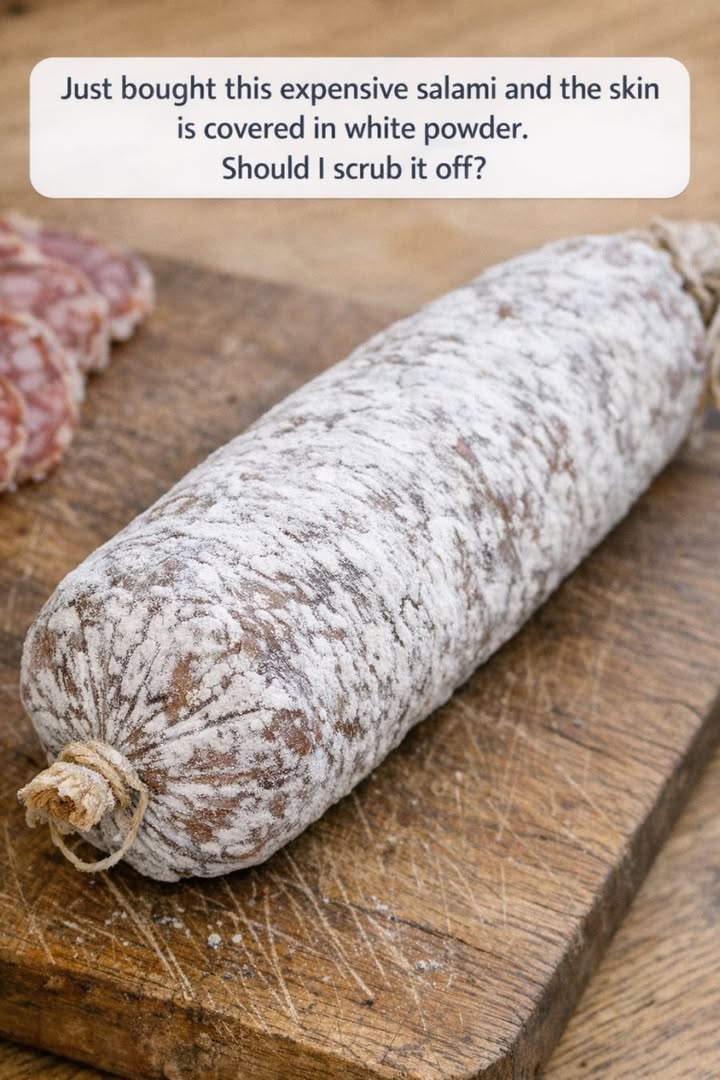
While most white molds on salami are safe, it’s important to distinguish between beneficial mold and signs of spoilage. Safe molds typically appear as a uniform, white powdery coating. If you notice any spots of green, black, or fuzzy mold, it could indicate spoilage, and the salami should be discarded.
Additionally, check for any off-putting odors. A properly cured salami should have a pleasant, slightly tangy aroma. If it smells sour, ammonia-like, or otherwise unpleasant, it may not be safe to eat. In such cases, it’s best to err on the side of caution and avoid consumption.
4. When White Powder Is Just Rice Flour or Dextrose
In some instances, the white powder on salami might not be mold but rather a coating of rice flour or dextrose. These substances are sometimes applied to the salami to prevent it from sticking to casings or to absorb moisture, aiding in the preservation process.
Rice flour is a common anti-caking agent that creates a smooth, non-sticky surface on the salami, while dextrose, a type of sugar, can help promote the growth of beneficial bacteria during fermentation. Both are safe to consume, though they might slightly alter the texture of the salami’s surface.
5. Is It Safe to Eat the Salami Skin as Is?
In most cases, the white powder on the salami skin is safe to eat. The beneficial mold or flour coating is an integral part of the curing process, contributing to the preservation and flavor development of the salami. Many people enjoy the added texture and slight tang that the mold provides.
However, if you are unsure or uncomfortable with consuming the skin, you can choose to remove it. The interior of the salami will still retain its robust flavors and remain safe to eat without the skin.
6. When You Should Definitely Not Eat the Rind
There are certain scenarios where you should avoid eating the rind of the salami. If the white powder appears discolored, such as green or black, or if the surface feels slimy, it may indicate spoilage. Similarly, any unpleasant or off-putting odors, such as a sour or ammonia-like smell, are signs that the salami should not be consumed.
In these cases, it’s best to err on the side of caution and discard the salami entirely. Consuming spoiled meat can lead to foodborne illnesses, which are best avoided by being vigilant about the salami’s appearance and smell.
7. How to Clean the Salami: Wiping, Scrubbing, and Peeling
If you decide to remove the white coating from your salami, there are several methods to do so. One simple approach is to wipe the surface with a damp cloth, which can help remove the powder without damaging the salami itself. For a more thorough cleaning, you might gently scrub the surface with a soft brush under cold running water.
Alternatively, you can peel the skin off entirely, though this might remove some of the flavorful rind along with it. Peeling is best done with a sharp knife, slicing carefully to avoid cutting into the meat itself. Regardless of the method you choose, the interior of the salami will remain delicious and ready to enjoy.
For Complete Cooking STEPS Please Head On Over To Next Page Or Open button (>) and don’t forget to SHARE with your Facebook friends
ADVERTISEMENT
