
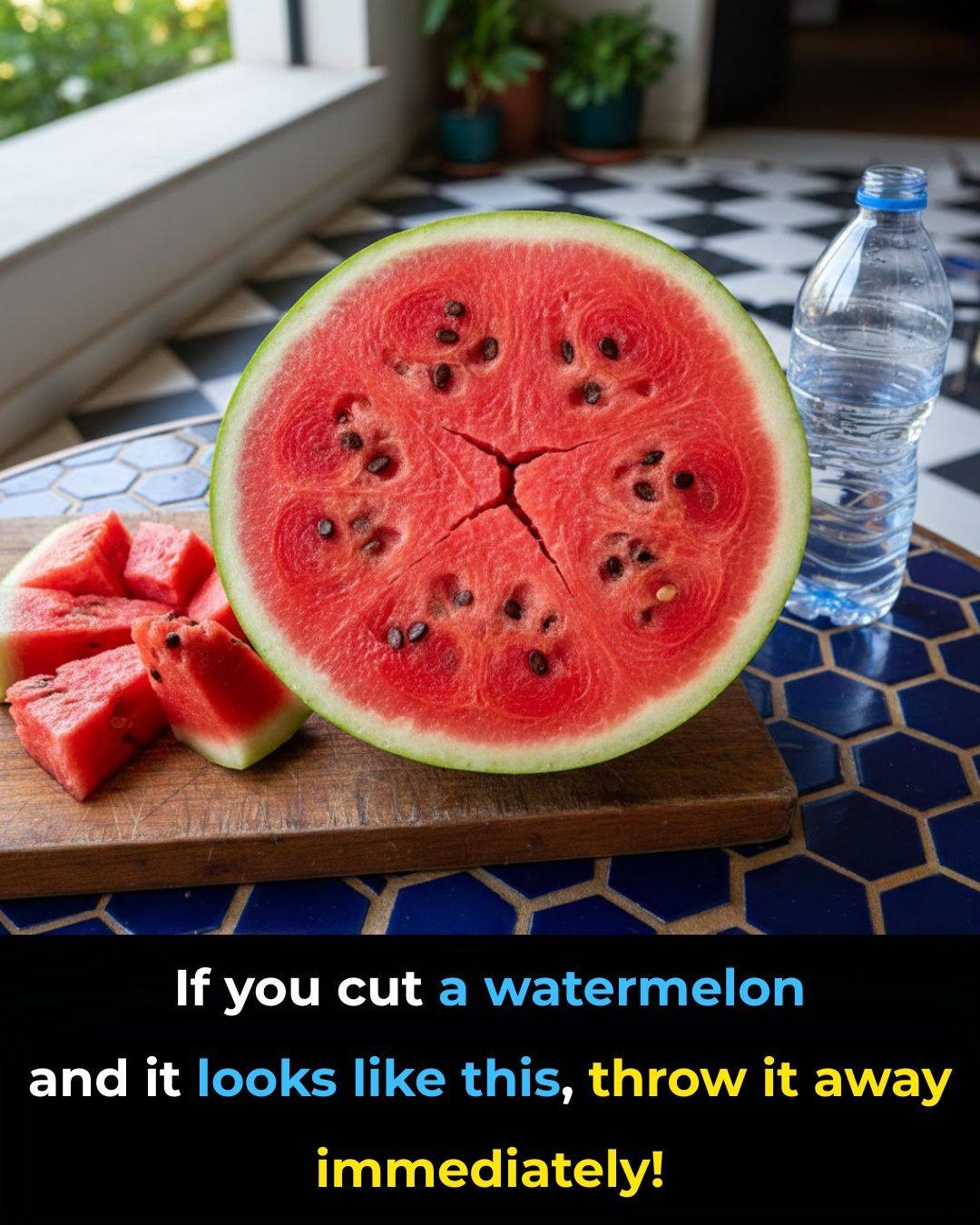
Like many fresh fruits, watermelon can spoil quickly once it’s cut—or if it’s been stored improperly. Eating spoiled fruit can increase the risk of foodborne illness, especially if bacteria have started to multiply in the moist, sugary environment.
A quick sensory check before eating—using your eyes, nose, hands, and taste—can make all the difference between a refreshing treat and an unpleasant (or unsafe) experience.
7 Warning Signs Your Watermelon Has Gone Bad
1. Sour or Unpleasant Smell
Fresh watermelon has a light, clean, slightly sweet scent. If you notice a sour, fermented, or “off” odor—especially near the cut surface—it’s a clear sign the fruit has started to spoil. Trust your nose: it’s often the first and most reliable detector.
2. Slimy or Sticky Texture
Healthy watermelon flesh should feel firm, crisp, and juicy. If it feels slimy, mushy, or unusually sticky to the touch, bacterial growth is likely underway. This texture change is a definite signal to discard the fruit.
3. Dull or Discolored Flesh
Fresh watermelon is vibrantly pink or red inside (depending on variety). Watch out for dark spots, brown patches, grayish areas, or an overall faded, pale appearance. These discolorations can indicate decay, oxidation, or bacterial activity.
4. Visible Mold Growth
This one’s obvious—but critically important. If you see white fuzz, green spots, black patches, or any fuzzy growth on the flesh or rind, throw it away immediately. Mold roots can penetrate deeper than what’s visible on the surface, making partial removal unsafe.
5. Fizzy or Tingling Taste
If your watermelon tastes slightly fizzy, bubbly, or tingles on your tongue, it may be fermenting. This happens when natural sugars break down due to yeast or bacterial activity. Even if it looks fine, that fizzy sensation is a definite sign to toss it.
6. Overly Soft or Collapsing Texture
An overripe or spoiled watermelon may feel excessively soft, collapse easily when pressed or cut, or lose its crisp, structured bite. Texture changes are often among the earliest—and most telling—signs of spoilage.
7. Strange or “Off” Taste (Trust Your Instincts!)
Even if everything looks and smells okay, your taste buds often know best. If a bite tastes sour, bitter, metallic, or just subtly “wrong,” don’t risk it. Spit it out and discard the rest. Your body’s intuition is a powerful safety tool.
You Must Know: Important Context
Cut fruit spoils faster: Once watermelon is sliced, its protective rind is broken, exposing the flesh to air, moisture, and potential contaminants. Refrigerate promptly and consume within 3–5 days.
Whole melons last longer: An uncut watermelon can stay fresh at room temperature for 7–10 days (or longer in a cool, dark place).
Pre-cut caution: When buying pre-sliced watermelon, check the packaging date, ensure it’s been kept cold, and inspect the flesh for any signs of sliminess or discoloration before purchasing.
When in doubt, throw it out: Food safety isn’t worth gambling with. If you’re uncertain, it’s always safer to discard the fruit.
Storage Tips: How to Keep Watermelon Fresh Longer
Store whole melons properly: Keep uncut watermelon at room temperature until ready to cut. This preserves flavor and texture better than early refrigeration.
Refrigerate after cutting: Once sliced, wrap tightly in plastic wrap or store in an airtight container. Place cut-side down on a plate to minimize air exposure.
Keep it cold: Store at or below 40°F (4°C) to slow bacterial growth. Use a refrigerator thermometer to verify temperature if unsure.
Consume promptly: For best quality and safety, eat cut watermelon within 3–5 days. Label containers with the date to track freshness.
Freeze for later: Cube fresh watermelon and freeze on a baking sheet before transferring to a freezer bag. Frozen cubes are perfect for smoothies, slushies, or chilled snacks (though texture will soften upon thawing).
For Complete Cooking STEPS Please Head On Over To Next Page Or Open button (>) and don’t forget to SHARE with your Facebook friends
ADVERTISEMENT
