
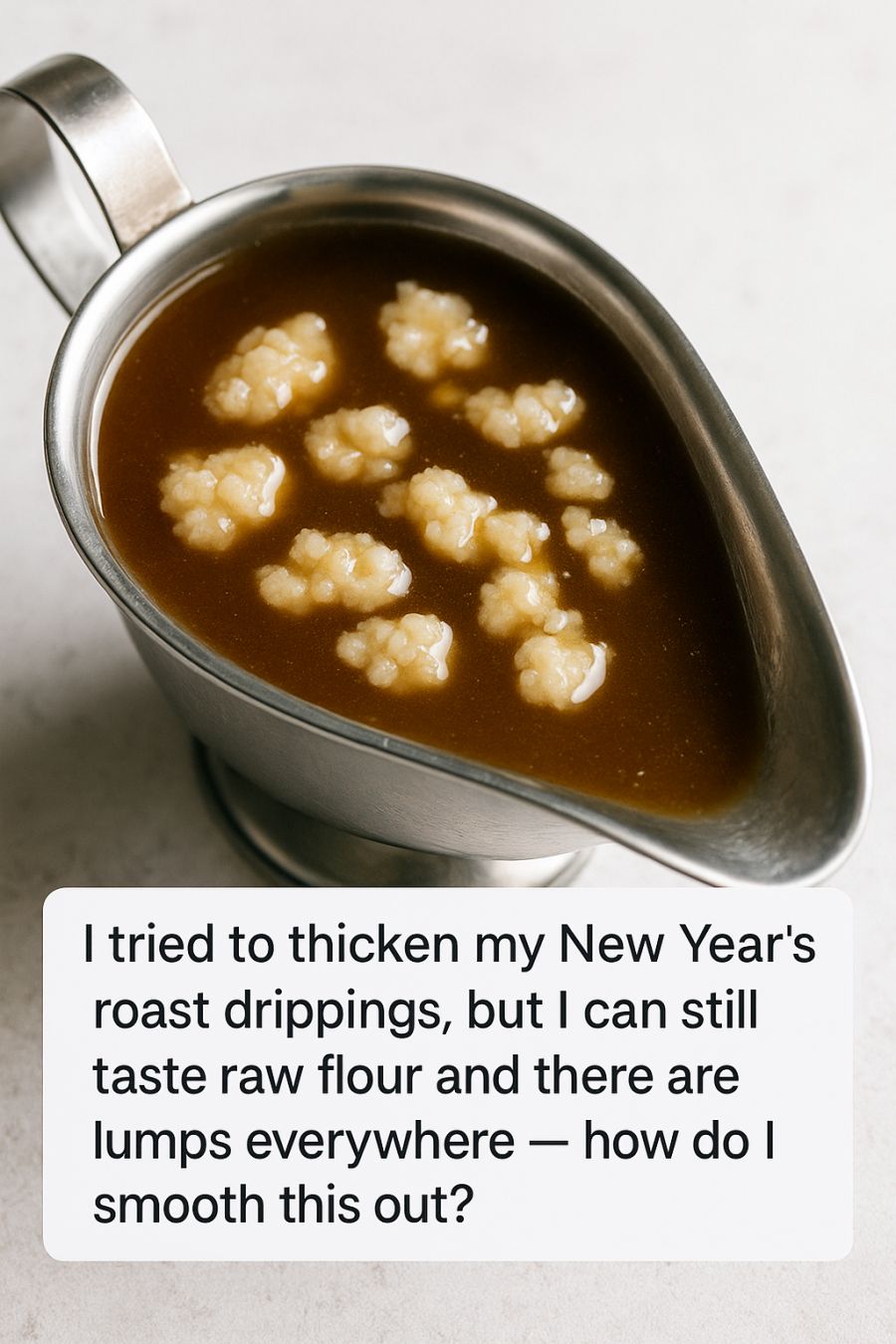
The New Year’s roast is a time-honored tradition, promising a feast that brings family and friends together over a plentiful table. At the heart of this celebration is the perfect gravy, made from the drippings of your well-roasted meat. However, making the ideal gravy can be fraught with challenges, especially when flour is involved. Many home cooks find themselves in a sticky situation with a sauce that tastes uncooked and is marred by unsightly lumps.
If you’ve ever faced this culinary conundrum, you’re not alone. Raw flour taste and lumpy gravy are common issues that can easily turn a meal from mouthwatering to mediocre. Fortunately, these problems can be rectified with a few simple techniques. In this article, we’ll explore the reasons behind these common gravy woes and offer practical solutions to ensure your New Year’s meal is as seamless and satisfying as possible.
1. Why Your Gravy Tastes Like Raw Flour
The raw flour taste in gravy is usually a result of insufficient cooking time. When flour is not cooked long enough, it retains a raw taste that can overpower the other flavors in your dish. Typically, when making a roux (a mixture of flour and fat used to thicken sauces), the flour should be cooked for at least 2-3 minutes over medium heat until it reaches a light golden color. This allows the flour to lose its raw taste and develop a nuttier flavor, which will complement your gravy.
Additionally, using the right ratio of flour to fat is crucial. A good starting point is to use equal parts of flour and fat by weight. For example, if you are using 2 tablespoons of fat (such as butter or drippings), you should use approximately 2 tablespoons of flour.
2. The Science of Roux: How Long You Actually Need to Cook It
Cooking a roux is a delicate balance. The length of time you cook your roux will depend on the flavor and color you desire. For a light gravy, a white roux is typically cooked for 2-5 minutes until it just begins to take on color. For a deeper flavor, a blonde roux is cooked for 5-7 minutes until it turns a golden tan.
The key is to stir constantly to prevent burning and ensure even cooking. A properly cooked roux will have a slightly nutty aroma and a smooth consistency, providing a stable base for your gravy.
3. The Immediate Fix: Simmering Out That Raw Flour Taste
If you find your gravy tastes like raw flour, one immediate fix is to simmer it longer. Bring your gravy to a gentle simmer, stirring frequently, and allow it to cook for an additional 5-10 minutes. This extra cooking time helps to mellow the raw flour taste and improve the overall flavor.
Be cautious not to let your gravy boil vigorously, as this can lead to over-reduction or burning. A low simmer is ideal for coaxing out the best flavors and achieving a smooth texture.
For Complete Cooking STEPS Please Head On Over To Next Page Or Open button (>) and don’t forget to SHARE with your Facebook friends
ADVERTISEMENT
