
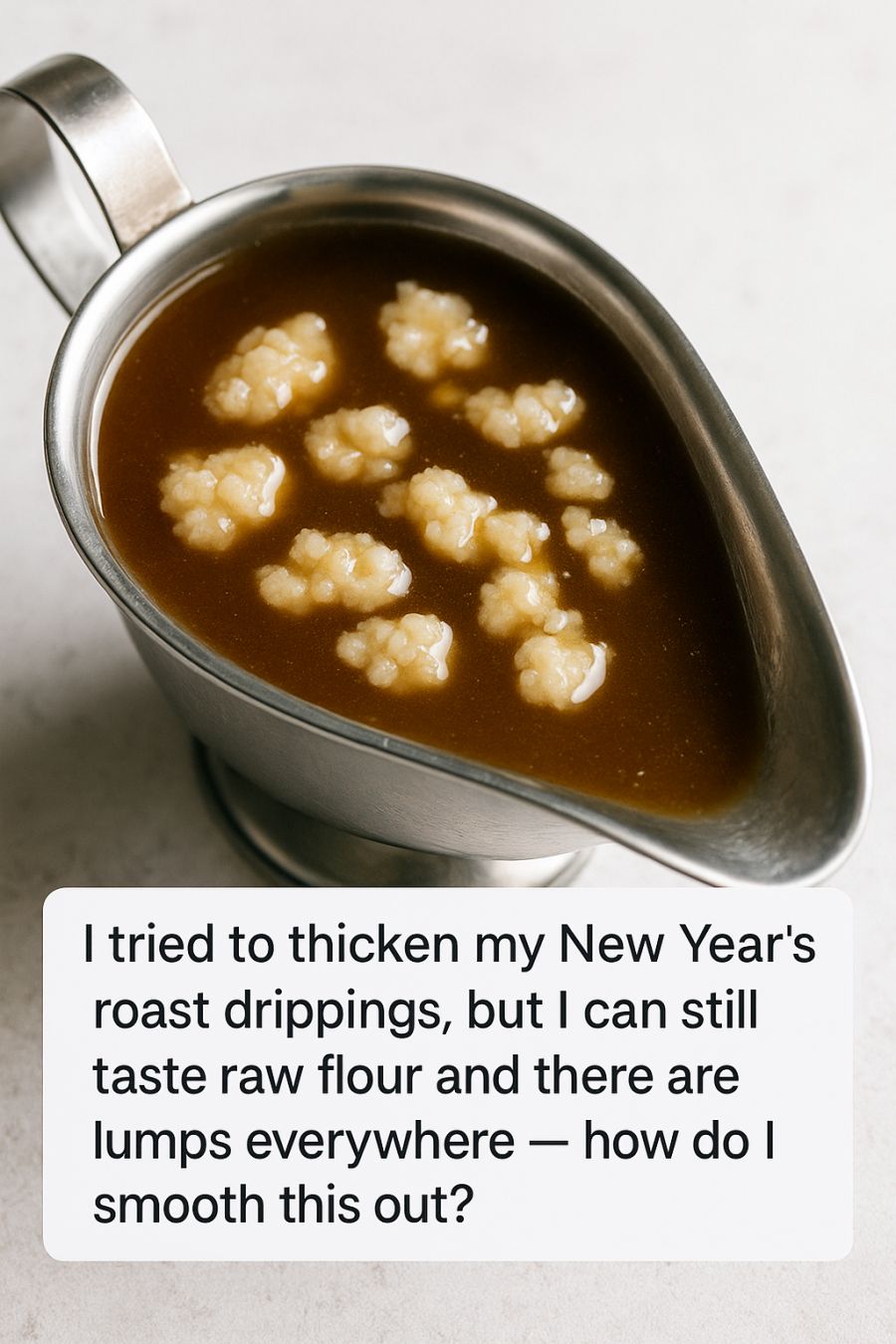
4. Whisking Like a Pro: How to Beat Lumps Into Submission
Lumps in gravy are usually caused by adding flour too quickly or not stirring adequately. To avoid this, always add your flour slowly while whisking continuously. A good whisk is your best friend in this situation, as it helps to break up any clumps and incorporate the flour evenly.
If lumps persist, increase your whisking speed while keeping your saucepan on low heat. This should help to dissolve any remaining clumps and give your gravy a smooth finish.
5. Strain It To Save It: The Fine-Mesh Sieve Hack
If your gravy is still lumpy despite your best efforts, a fine-mesh sieve can be a lifesaver. Pour your gravy through the sieve into a clean saucepan or bowl, using a spatula to press it through. This will catch any remaining lumps, leaving you with a smooth, lump-free gravy.
This method is particularly useful if you are short on time and need a quick fix. Just be sure to taste your gravy after straining and adjust the seasoning as needed.
6. Blender Rescue: Using an Immersion Blender to Smooth Lumpy Gravy
An immersion blender is another effective tool for rescuing lumpy gravy. Simply insert the blender into your saucepan and blend on low speed until the lumps are gone. Be careful not to overblend, as this can incorporate too much air and make your gravy frothy.
If you don’t have an immersion blender, a regular blender can also work. Just be sure to blend in small batches and hold the lid down tightly to avoid any hot splatters.
7. When to Add More Liquid (And When Not To)
Adding more liquid to your gravy can sometimes help dissolve flour lumps, but it’s important to do so judiciously. If your gravy is too thick and lumpy, adding a small amount of warm stock or water while whisking can help achieve a smoother consistency.
However, if your gravy is already at the desired thickness, adding more liquid may dilute the flavor. In such cases, it’s better to focus on other methods like whisking or straining to achieve a smooth texture.
8. Thickening Without Flour: Cornstarch, Arrowroot, and Other Alternatives
If you want to avoid the raw flour taste altogether, consider using alternative thickeners like cornstarch or arrowroot. These options require less cooking time and are less likely to impart a raw taste.
To thicken gravy with cornstarch, mix 1 tablespoon of cornstarch with 1 tablespoon of cold water to form a slurry. Gradually add the slurry to your simmering gravy, whisking constantly until the desired thickness is reached. Arrowroot works similarly but provides a clearer finish, making it ideal for lighter gravies.
For Complete Cooking STEPS Please Head On Over To Next Page Or Open button (>) and don’t forget to SHARE with your Facebook friends
ADVERTISEMENT
