
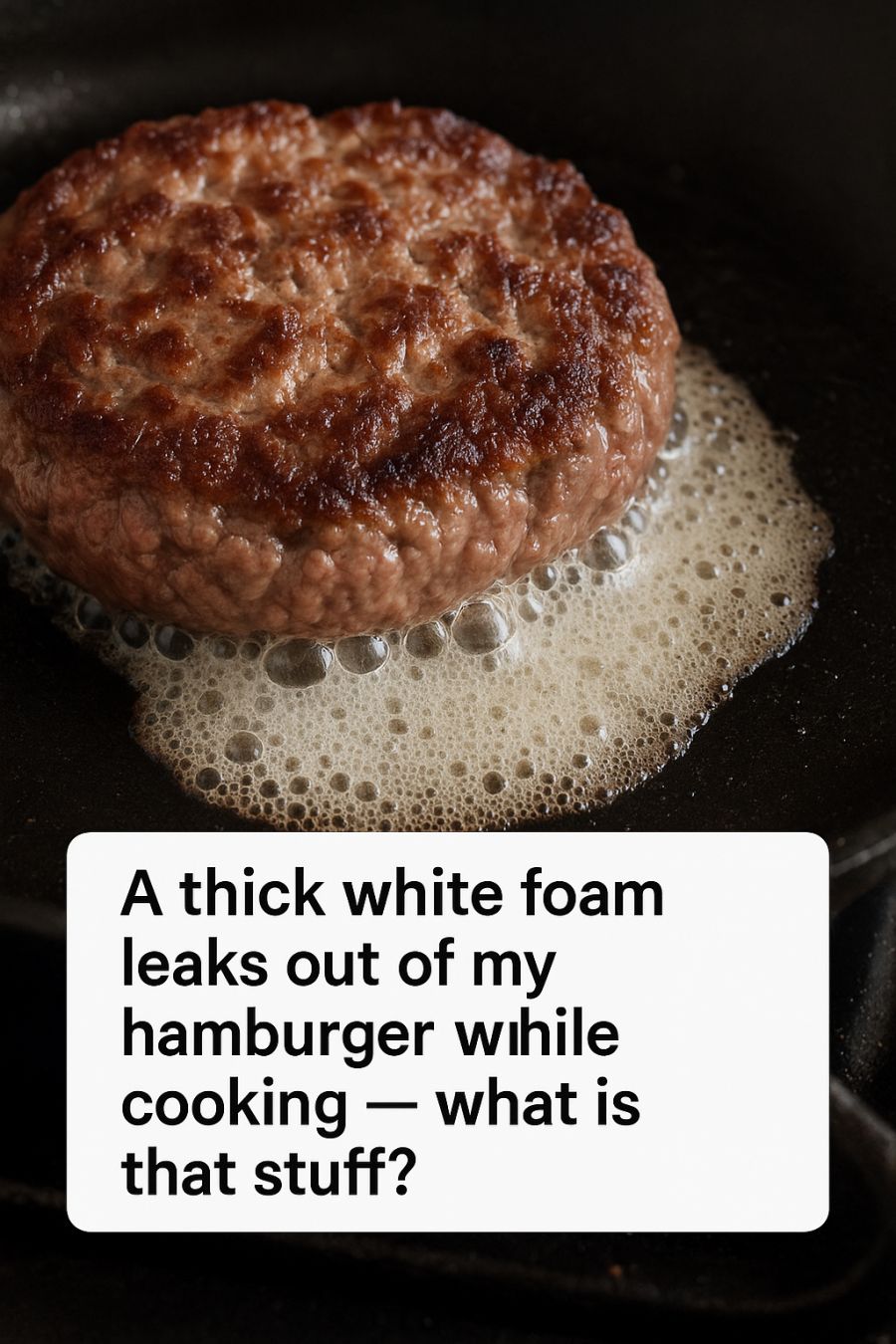
2. How Protein in Ground Beef Creates the Foam
When beef is ground, more of the muscle fiber is exposed to the surface, which means more proteins are in contact with heat when cooked. As the beef heats up, the proteins denature and coagulate, which is a fancy way of saying they unravel and bond together to form a solid mass. This coagulation process is what forms the white foam as the proteins are expelled from the meat along with water and fat.
The specific proteins involved include myoglobin and albumin, which are prevalent in muscle tissues. As these proteins heat up, they become less soluble and coagulate, creating a foam-like appearance on the surface of the cooking meat.
3. The Role of Fat Rendering and Water in the White Buildup
Fat and water content play significant roles in the formation of the white foam. As the meat cooks, the fat begins to render, or melt, which releases additional moisture. This moisture, combined with the proteins, contributes to the white foam. The amount of fat in the meat can affect how much foam is produced: higher fat content generally means more rendered fat and potentially more foam.
Additionally, the water content in the meat, which is naturally present and sometimes added during processing, also influences the foam. As the meat cooks, the water turns into steam and mixes with the proteins, leading to the frothy appearance. This is why leaner meats or those with less added water tend to produce less foam.
4. Is the White Foam Safe to Eat?
Yes, the white foam is safe to eat. It is simply a combination of proteins, water, and fat that has been expelled from the meat during cooking. While it may not look particularly appetizing, it doesn’t pose any health risks. Some people might choose to skim it off for aesthetic reasons or to achieve a cleaner presentation, but it’s not necessary from a safety standpoint.
However, if the foam appears discolored or has an off smell, it could be an indicator of spoilage or poor meat quality. In such cases, it’s best to rely on your senses and err on the side of caution by not consuming the meat.
5. Fresh vs. Frozen Patties: Why Some Burgers Foam More
Fresh and frozen patties can react differently during cooking, and this affects the amount of foam produced. Frozen patties often contain more water due to the freezing process. As a result, when they are cooked, the extra moisture contributes to more foam compared to fresh patties. Additionally, frozen patties might have been pre-formed with added ingredients that can also impact the amount of foam.
Fresh patties, on the other hand, tend to have less added water and fillers, leading to less foam production. However, if the fresh meat has a high fat content, it can still produce a noticeable amount of foam. The key is to understand that both types of patties can produce foam, but the extent varies based on their initial composition and handling.
6. The Impact of Meat Quality, Fillers, and Added Liquids
The quality of the meat you use has a significant impact on how much foam is produced during cooking. Higher-quality meats with fewer additives tend to produce less foam. Lower-quality meats might contain fillers such as soy protein or breadcrumbs, which can increase the amount of foam as they release their own proteins and moisture.
Additionally, some ground beef products have added liquids to enhance juiciness or weight. These added liquids increase the water content, which in turn leads to more foam as the water is released during cooking. Choosing meat with minimal additives and understanding the labels can help you select products that will produce less foam.
7. Pan Crowding, Heat Levels, and Other Cooking Mistakes
The way you cook your burgers can greatly influence the amount of foam that appears. Crowding the pan with too many patties at once can trap steam and moisture, leading to more foam. When the pan is crowded, the meat steams rather than sears, which enhances foam production.
Similarly, cooking at too low a temperature can prevent the meat from browning properly, allowing more proteins and water to be expelled as foam. It’s important to maintain a proper heat level that allows for a good sear and minimizes steaming. Ensuring there’s enough space between patties and using the right cooking temperature can help reduce the amount of foam.
For Complete Cooking STEPS Please Head On Over To Next Page Or Open button (>) and don’t forget to SHARE with your Facebook friends
ADVERTISEMENT
