
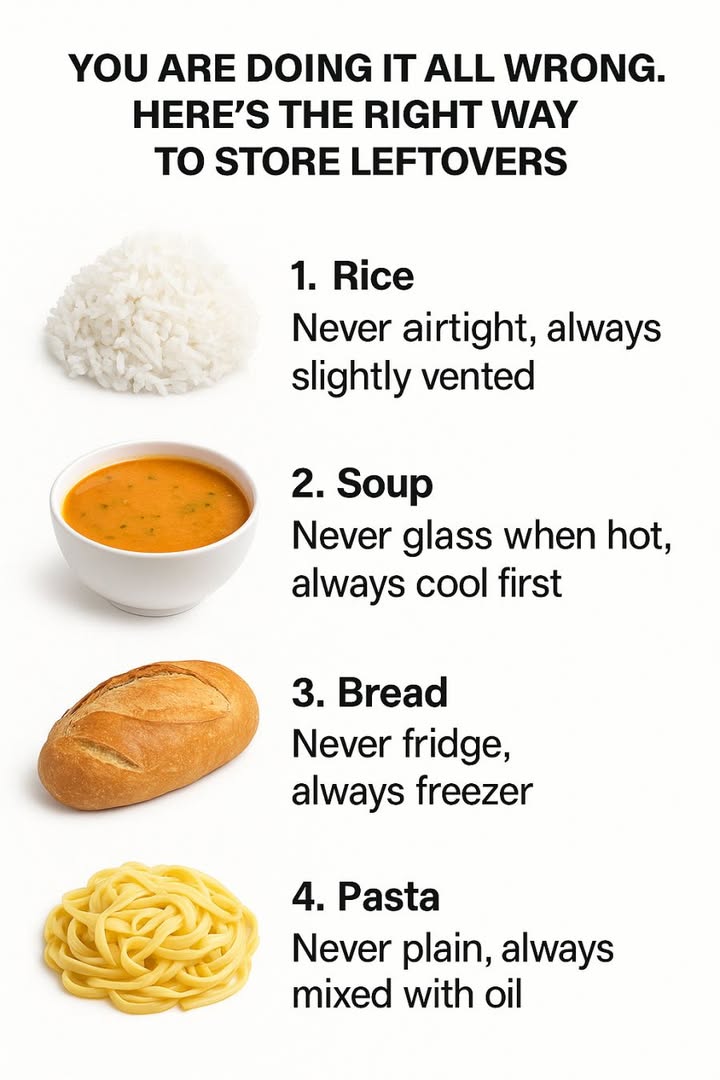
3. Why Rice Should Never Be Stored Airtight
Storing rice in airtight containers can lead to a buildup of moisture, which encourages the growth of bacteria such as Bacillus cereus. This bacterium can cause foodborne illness if rice is not handled properly.
To store rice safely, allow it to cool quickly and transfer it to a container with a loose-fitting lid or a container with a slight vent. This setup allows moisture to escape, reducing the risk of bacterial growth. Consume stored rice within one to two days, and ensure it is thoroughly reheated before consumption.
4. Cooling Soup Before Storing in Glass Containers
Hot liquids like soup can cause glass containers to crack due to thermal shock. To prevent this, allow the soup to cool to room temperature before transferring it to a glass container.
To speed up the cooling process, divide the soup into smaller portions in shallow containers. This increases the surface area, allowing it to cool faster. Once cooled, cover and store the soup in the fridge. When reheating, ensure the soup reaches a temperature of 165°F to ensure safety.
5. The Best Way to Store Bread: Freezer vs. Fridge
Storing bread properly can extend its shelf life and preserve its texture. The refrigerator might seem like a good option, but it can actually cause bread to stale faster due to the process of retrogradation, where the starch molecules recrystallize.
The freezer is a better option for long-term storage. Wrap bread tightly in plastic wrap or aluminum foil, then place it in a freezer bag to prevent freezer burn. When you’re ready to use the bread, thaw it at room temperature or toast it directly from frozen for best results.
6. Storing Pasta: Mixing with Oil to Prevent Stickiness
Pasta tends to stick together when stored, especially if it’s left without any sauce. To prevent this, toss the cooked pasta with a little olive oil before storing.
This method creates a barrier between the pasta strands, reducing stickiness. Store the pasta in an airtight container in the refrigerator, and it’s best consumed within three to five days. When reheating, a splash of water can help restore moisture and prevent it from drying out.
7. Maximizing Freshness with Proper Labeling
Labeling your leftovers might seem like an unnecessary step, but it can significantly enhance food safety and reduce waste. Include the date of storage and a brief description of the contents on the label.
This practice helps you keep track of how long items have been stored, ensuring you consume them while they’re still fresh. Use a waterproof marker or labels that won’t smudge in the freezer or fridge.
For Complete Cooking STEPS Please Head On Over To Next Page Or Open button (>) and don’t forget to SHARE with your Facebook friends
ADVERTISEMENT
