
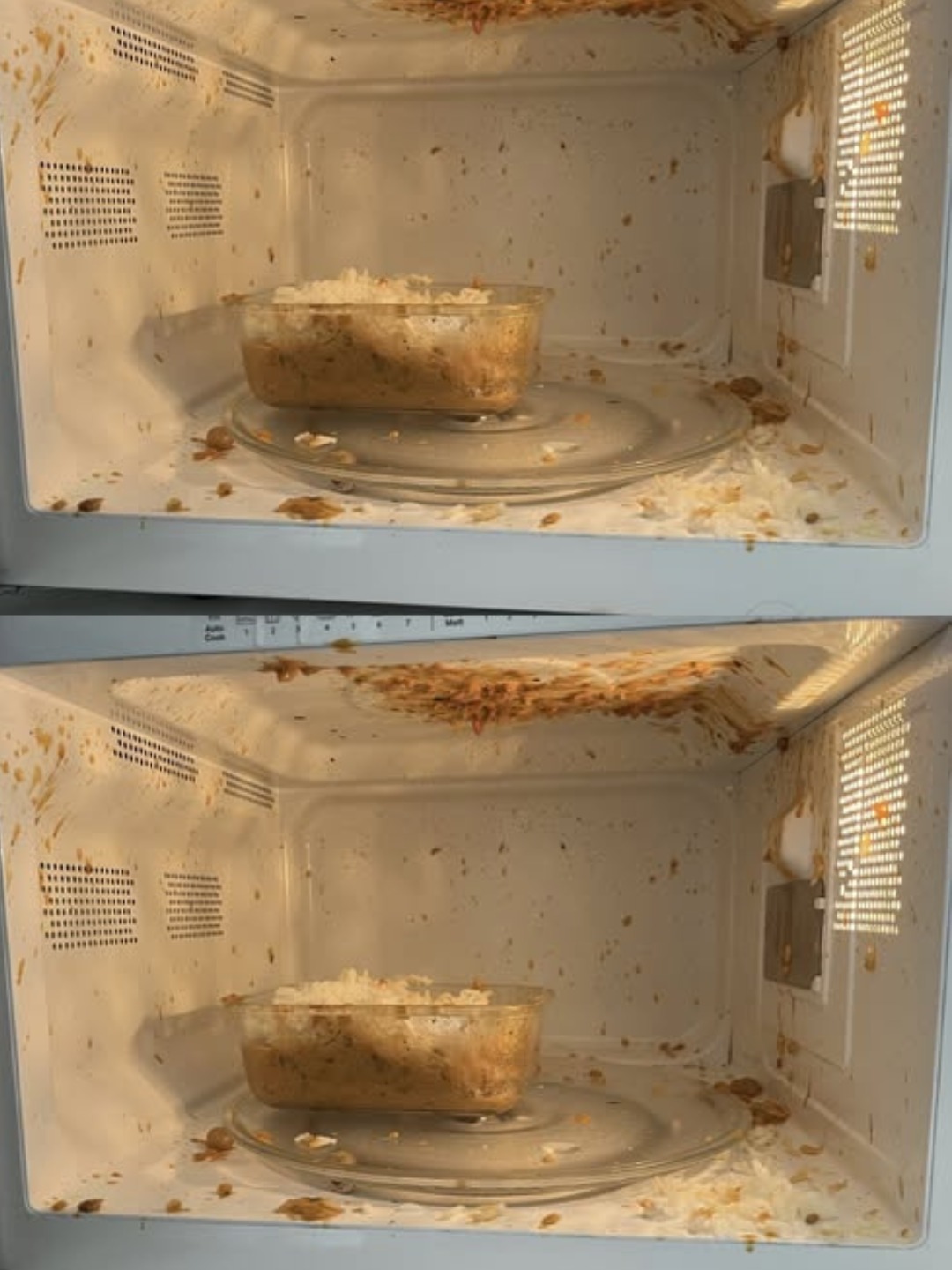
One second — quiet.
The next — yellow goo on your microwave ceiling.
✅ Safer alternative: Peel hard-boiled eggs and reheat gently on low power — or enjoy them cold.
🥛 2. Breast Milk or Formula
Why it’s dangerous:
Microwaves heat unevenly, creating hot spots that can burn a baby’s mouth .
They can also destroy vital nutrients and antibodies in breast milk.
What happens:
A bottle that feels warm on the outside can scald your baby’s tongue.
✅ Safer alternative: Warm bottles by placing them in a bowl of warm water — never in the microwave.
🍌 3. Whole Fruits (Especially Grapes)
Why it’s dangerous:
Grapes (and cherries, blueberries) can catch fire in the microwave.
When microwaved whole, the size and water content create plasma sparks — literally.
What happens:
A grape can turn into a mini fireball in seconds.
✅ Safer alternative: Cut fruits in half or avoid microwaving them entirely.
🧈 4. Butter or Fatty Foods in Paper Towels
Why it’s risky:
Paper towels can catch fire if they dry out and overheat.
Fatty foods like bacon or butter release oil that soaks into the paper — a fire hazard.
What happens:
Smoke, flames, and a ruined microwave.
✅ Safer alternative: Use a microwave-safe plate with a splatter lid.
🍝 5. Rice (Especially Leftover)
Why it’s risky:
Cooked rice can harbor Bacillus cereus , a bacteria that survives cooking and multiplies at room temperature.
Microwaving doesn’t always kill it — and can make it worse if not heated evenly.
What happens:
Food poisoning with nausea, vomiting, and diarrhea — even if it tastes fine.
✅ Safer alternative: Reheat rice thoroughly to steaming hot (165°F), and never leave it out overnight.
🍗 6. Chicken or Meat (Unevenly)
Why it’s risky:
Microwaves heat unevenly — so your chicken might look warm but still have cold spots where bacteria survive .
What happens:
Undercooked meat = foodborne illness risk.
✅ Safer alternative: Stir or rotate halfway through. Use a food thermometer to ensure it reaches 165°F.
🍞 7. Bread (For More Than 10 Seconds)
Why it’s gross:
Microwaving bread makes it chewy, rubbery, or hard — not warm and soft.
The rapid heating removes moisture and alters the starch structure.
What happens:
A bagel that feels like a stress ball.
✅ Safer alternative: Use a toaster or oven for crisp, even warmth.
🥡 8. Takeout Containers (Especially Cardboard or Foam)
Why it’s dangerous:
Many takeout boxes are made of cardboard with metal accents or plastic coatings that can melt or catch fire .
Even if labeled “microwave-safe,” many aren’t tested for long-term use.
For Complete Cooking STEPS Please Head On Over To Next Page Or Open button (>) and don’t forget to SHARE with your Facebook friends
ADVERTISEMENT
