
Where the Practice Comes From
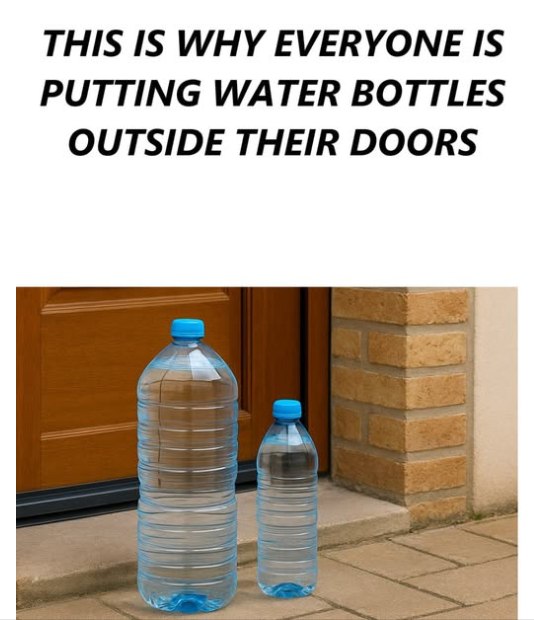
The exact origin of this habit is unclear, but it is widely believed to have spread through word of mouth rather than science. In many communities, one person tries it, claims success, and neighbors quickly follow suit. Over time, the practice becomes normalized, even if no one can clearly explain why it works.
In Italy, the bottles are sometimes referred to as a traditional remedy, passed down informally. Similar ideas have appeared in Japan and other countries, where reflective objects are used in gardens to scare away pests or animals. The water bottle method may be a simplified urban version of these older deterrent techniques.
Myth vs. Reality
Despite its popularity, there is no scientific evidence that placing water bottles outside homes effectively prevents dogs or cats from urinating on walls. Animal behavior experts generally agree that pets are not reliably deterred by reflections from water bottles.
Dogs, in particular, rely heavily on scent rather than sight when choosing where to mark. If an area already smells like urine, it becomes even more attractive, regardless of whether bottles are present. Cats also respond primarily to scent and familiarity, not visual distractions.
In many cases where homeowners believe the bottles worked, the change may be coincidental. The animal may have simply chosen a different spot, or a responsible pet owner may have altered their walking route. This coincidence can reinforce belief in the method, even if the bottles had no real effect.
Why the Bottle Trick Persists
If the method is largely ineffective, why does it continue to appear in so many places? The answer lies in psychology and convenience.
First, the solution is incredibly simple. Anyone can fill an old bottle with water and place it outside within minutes. There is no cost, no technical knowledge required, and no risk involved.
Second, the placebo effect plays a role. Homeowners feel proactive, as though they are doing something to protect their property. That sense of control can be comforting, even if the actual results are minimal.
Third, tradition and social proof reinforce the behavior. When people see bottles outside multiple homes, they assume the method must work. Few stop to question it, especially when it seems harmless.
Finally, the bottles are non-confrontational. Instead of confronting pet owners or posting warning signs, homeowners can quietly express their preference without words. This passive approach appeals to many people who want to avoid neighborhood tension.
For Complete Cooking STEPS Please Head On Over To Next Page Or Open button (>) and don’t forget to SHARE with your Facebook friends
ADVERTISEMENT
