
3. What Slow Cooking Does to Meat Structure
Slow cooking is a method that uses low temperatures over a prolonged period to break down tough fibers and connective tissues in meat. This process transforms collagen into gelatin, which gives the meat a tender texture and rich flavor.
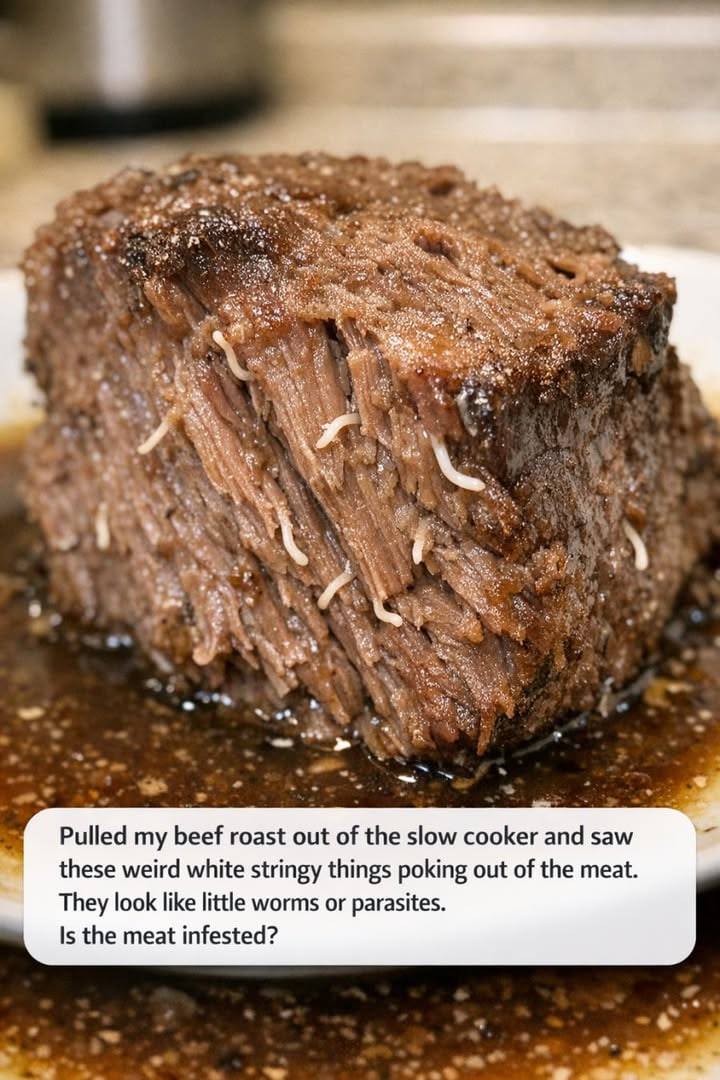
As the collagen breaks down, it can sometimes create white, stringy appearances on the surface of the meat or throughout the interior. This is particularly common in cuts that have a high amount of connective tissue. The slow, moist environment of a slow cooker is ideal for this transformation, making it an excellent choice for tougher cuts of meat.
4. How Contracting Fibers Can Suddenly “Pop Out” of a Roast
During the slow cooking process, the muscle fibers in the meat contract and lose moisture. As the fibers contract, they can sometimes push out or expose the connective tissues, which appear as white strings. This phenomenon is more likely to occur in cuts with significant marbling or bands of connective tissue.
The appearance of these fibers “popping out” can be alarming, but it is a natural part of the cooking process. Heat causes the muscle fibers to tighten, and as they do, the softer, gelatinized collagen may be pushed to the surface or become more prominent within the meat.
5. Normal White Strings Versus True Parasites: Key Visual Differences
While it’s easy to mistake these white strings for something more concerning, there are distinct differences between normal connective tissue and parasites. Connective tissue is usually soft, gelatinous, and can be easily pulled apart with a fork. It often appears in clusters or bands.
Parasites, on the other hand, would appear as distinct, separate entities embedded within the meat. They typically have a more uniform shape and are not as easily broken apart. Additionally, parasites are rare in commercially sold beef due to stringent inspection and safety measures.
6. When to Worry: Smell, Color, and Texture Red Flags
While the white strings themselves are usually harmless, other indicators can reveal whether your meat is spoiled. Check for an off-putting odor; fresh beef should have a clean, slightly metallic smell. A sour or rancid odor is a red flag.
Examine the color and texture as well. The meat should be a consistent color—usually a rich brown after cooking—and should not have any slimy or sticky coating. If the meat feels tacky or has a greenish hue, it may not be safe to eat.
7. Safe Cooking Temperatures That Kill Parasites and Bacteria
To ensure the safety of your cooked beef, it’s crucial to reach the appropriate internal temperature. The USDA recommends cooking beef to a minimum internal temperature of 145°F (63°C), followed by a three-minute rest time. Slow-cooked beef often exceeds this temperature, especially after hours in the cooker.
These temperatures are sufficient to kill most parasites and bacteria, ensuring that your meal is safe to consume. Using a meat thermometer can help you verify the internal temperature and provide peace of mind.
For Complete Cooking STEPS Please Head On Over To Next Page Or Open button (>) and don’t forget to SHARE with your Facebook friends
ADVERTISEMENT
