
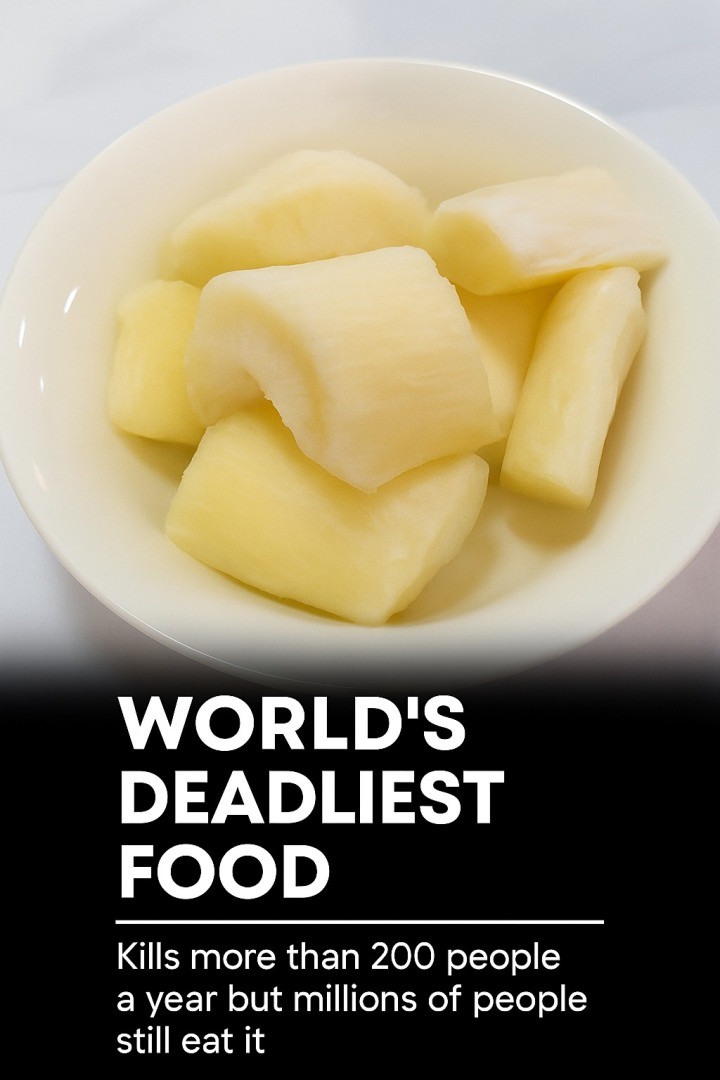
Even when cassava poisoning is not fatal, long-term consumption of poorly processed cassava can lead to serious conditions such as:
Konzo — a permanent paralysis of the legs
Thyroid disorders
Nerve damage
Chronic malnutrition
Doctors say these effects are most common in areas facing poverty and famine, where safe preparation methods are harder to follow.
Why So Many People Still Eat It
Despite the risks, cassava remains essential because:
It grows where other crops fail
It provides affordable calories
There are few alternatives in poor regions
When processed correctly — soaked, fermented, dried, and thoroughly cooked — cassava is safe to eat and nutritious.
How Cassava Can Be Made Safe
Health experts stress that cassava should never be eaten raw. Safe preparation includes:
✔ Peeling the root
✔ Soaking it in water for several days
✔ Fermenting or drying it
✔ Cooking it thoroughly
These steps reduce cyanide levels to safe limits.
The Bottom Line
Cassava is both a lifesaving food and a deadly threat. It feeds hundreds of millions, yet kills hundreds every year — not because it is evil, but because poverity, lack of education, and food scarcity make safe preparation difficult.
Doctors and global health organizations emphasize that education and proper processing can prevent nearly all cassava-related deaths.
ADVERTISEMENT
