
Directions
Preheat your oven to 375°F (190°C). Line a large baking sheet with parchment paper or lightly spray it with nonstick cooking spray for easy cleanup.
Prepare the au jus according to the can or package directions (usually mixing the condensed beef consommé with an equal amount of water). Bring it to a simmer in a small saucepan over low heat, then keep it warm while you assemble and bake the pockets.
Open the crescent roll cans and gently unroll the dough. Separate into 16 individual triangles and place them on the prepared baking sheet. If you need more space, use two baking sheets so the pockets have room to puff and brown evenly.
Place one half-slice of Swiss cheese on the wide end of each crescent triangle. Tear or fold the cheese as needed so it mostly stays on the dough and doesn’t hang over the edges too much.
Divide the roast beef evenly among the crescents, placing a small pile (about 1 1/2 to 2 tablespoons) on top of the cheese at the wide end of each triangle. Gently press the beef down so it sits in a little mound and doesn’t roll off when you start wrapping.
Starting at the wide end, roll each crescent up over the filling toward the pointed end, tucking in the sides slightly as you go to help keep the cheese and beef inside. Place each rolled pocket seam-side down on the baking sheet and curve them slightly into a crescent shape if you like, making sure they’re not touching.
Bake in the preheated oven for 11–14 minutes, or until the crescent pockets are puffed and a deep golden brown. If your oven runs hot, start checking around the 10-minute mark to avoid over-browning.
While the pockets bake, give the au jus a quick stir and keep it over very low heat so it stays warm but doesn’t boil away. Taste and adjust with a splash of water if it’s too salty or strong.
Remove the baking sheet from the oven and let the crescent pockets rest for 3–5 minutes. This helps the cheese set slightly so it doesn’t all ooze out when you pick them up.
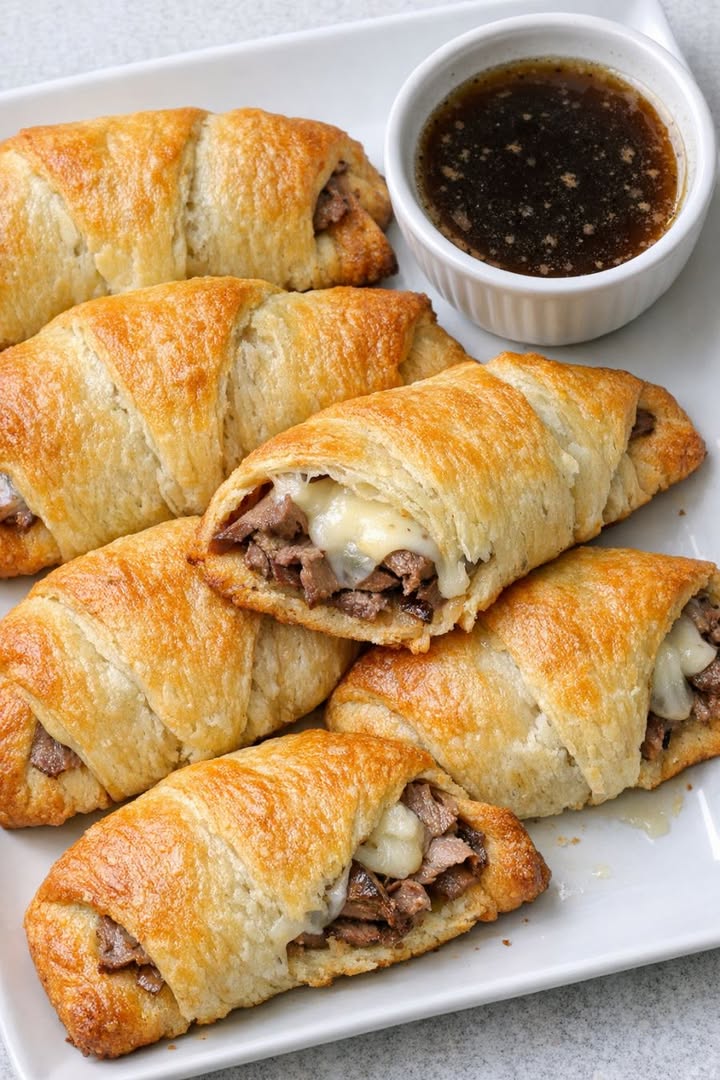
Transfer the golden, flaky crescent pockets to a white rectangular platter or your favorite serving dish. Pour the warm au jus into a small bowl or several ramekins for dipping, and serve immediately while everything is still hot and melty.
Variations & Tips
For a slightly fancier version (my neighbor does this when she really wants to impress her bridge club), brush the tops of the unbaked pockets lightly with melted butter and sprinkle them with a pinch of garlic powder and dried parsley before baking. If you like things extra cheesy, tuck a second half-slice of Swiss inside each pocket or swap in provolone for a milder flavor. To stretch the recipe for a bigger group, cut each baked pocket in half on a slight diagonal so they become more bite-sized, then arrange them tightly on a platter around the au jus bowl. You can also use leftover pot roast or sliced steak instead of deli roast beef—just make sure it’s thin and not too saucy so the dough doesn’t get soggy. For meal prep, assemble the pockets up to a few hours in advance, cover the baking sheet with plastic wrap, and refrigerate; when guests arrive, pull them out, uncover, and bake as directed, adding 1–2 extra minutes if needed. If you need to keep them warm for a while (perfect for game nights or card parties), place the baked pockets on a wire rack set over a baking sheet and keep them in a 200°F oven for up to 30 minutes so they stay crisp instead of steaming and getting soft.
ADVERTISEMENT
