
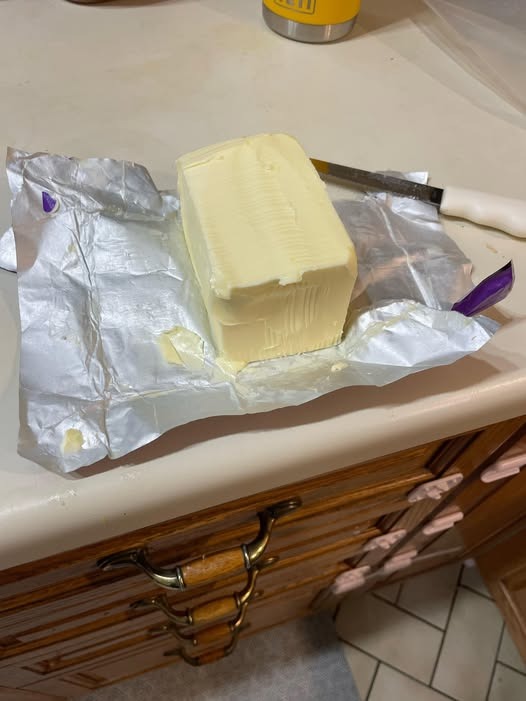
The secret lies in its science-backed simplicity:
High fat, low moisture: Butter is about 80% fat and only 15–18% water. Bacteria need moisture to grow—so butter’s dry environment naturally resists spoilage.
Salt is a preservative: Salted butter (most store-bought sticks) has added salt, which further inhibits microbial growth.
Acidity helps too: Cultured butter or European-style butters have a slightly acidic pH, making them less hospitable to bad bugs.
In short:
Butter doesn’t “go bad” the way other dairy does.
Instead, over time, it may become rancid—a flavor issue, not usually a safety one.
⏳ How Long Can Butter Sit Out Safely?
It depends on your kitchen—and how you store it.
Below 70°F (21°C), covered
✅ Up to
1 week
Above 70°F / hot/humid kitchen
❌ No more than
2–3 days
Unsalted butter
❌ Only
2–3 days max
(no salt = less protection)
Whipped butter
❌ Not recommended (air + moisture = faster spoilage)
💡 Pro tip: In summer or warm climates, play it safe and keep butter refrigerated.
🛡️ How to Store Butter on the Counter Safely
Want soft, spreadable butter without risking quality or safety? Follow these smart tips:
1. Use a Butter Dish with a Lid
Keeps dust, light, and flies away
Prevents odors from the kitchen (looking at you, onion soup)
Choose ceramic or opaque materials to block sunlight (UV speeds rancidity)
2. Try a Butter Bell (or Butter Crock)
This clever French invention uses water as a seal:
Fill the base with cold water
Place butter in the lid (bell-shaped cup)
Submerge the bell into the water—the airtight seal keeps butter fresh
Change water every 2–3 days
👉 Works beautifully for 2–4 weeks if kept cool!
3. Keep It Cool & Dark
Store your butter away from:
Direct sunlight
Stove heat
Dishwashers or ovens
Humid spots (like above the sink)
A drawer or pantry shelf? Perfect.
🚫 When to Say Goodbye: Signs Your Butter Has Gone Bad
Even well-stored butter won’t last forever. Watch for these red flags:
🔴 Rancid smell – Sharp, sour, or “off” odor (not just creamy anymore)
🔴 Sour or bitter taste – Take a tiny lick. If it tastes “wrong,” toss it.
🔴 Discoloration – Yellow turning pale, greyish, or spotty
🔴 Mold – Fuzzy spots = definite discard (even if only on surface—butter can trap mold roots)
⚠️ Note: A little darker color around edges? That’s oxidation—not harmful, but a sign it’s aging.
🕒 Speed Up Softening Without Risk
Need softened butter fast? Skip the microwave meltdown.
Try these safer methods:
✂️ Cut & Wait
Chop cold butter into small cubes.
Let sit at room temp for 15–20 minutes.
For Complete Cooking STEPS Please Head On Over To Next Page Or Open button (>) and don’t forget to SHARE with your Facebook friends
ADVERTISEMENT
