
8. Liquid Levels, Lids, and Evaporation: Are You Drying It Out?
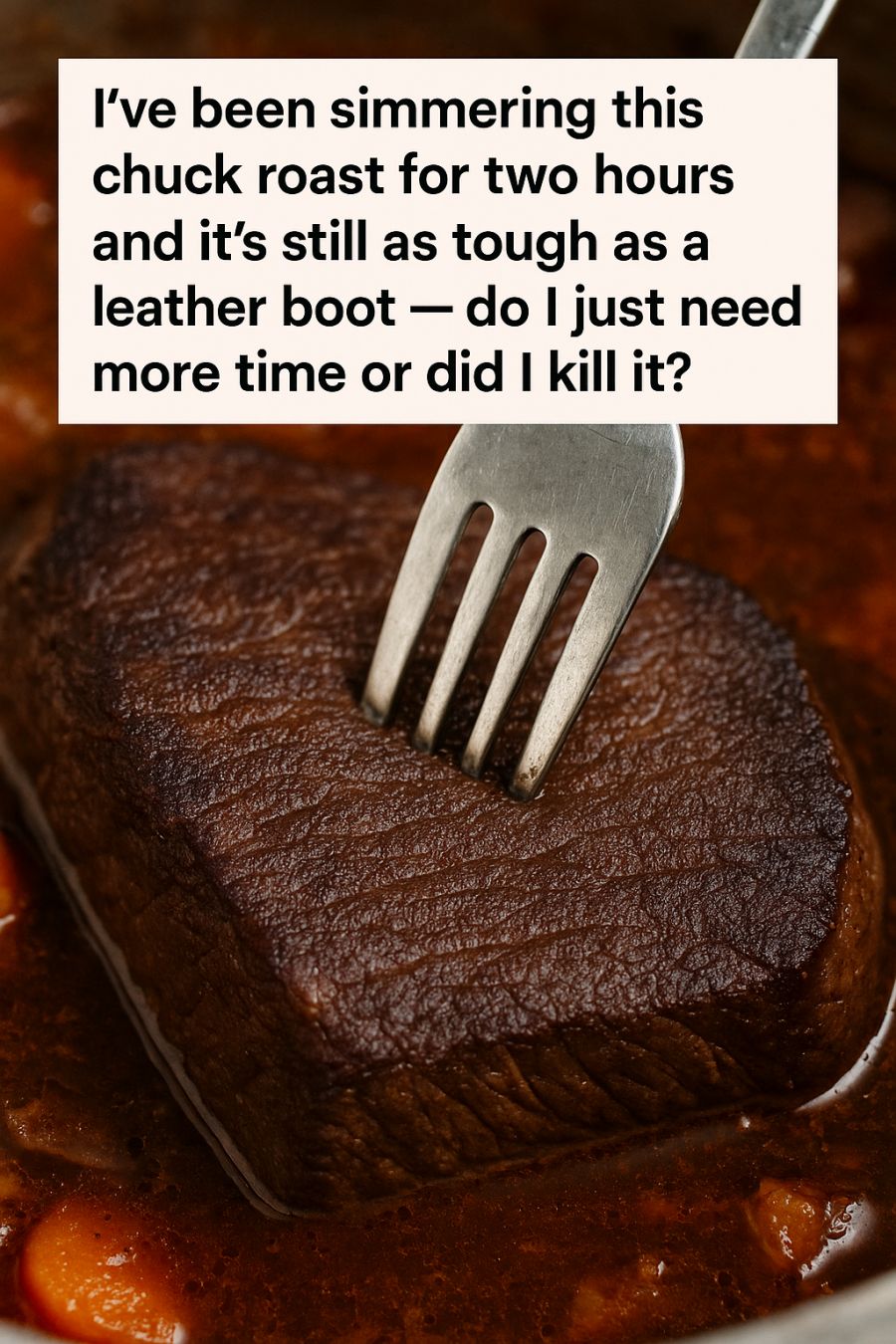
Ensuring your chuck roast remains moist during cooking is crucial. If the liquid level is too low, the roast can dry out. It’s important to maintain at least an inch of liquid in the cooking vessel, whether you’re braising or using a slow cooker.
Using a lid helps trap steam and moisture, preventing evaporation. If you’re using the oven, consider using a foil tent or a tightly fitting lid to keep the roast moist. Checking the liquid level periodically and adding more if necessary can help maintain the roast’s moisture.
9. The Role of Acids, Alcohol, and Umami in Breaking Down Tough Meat
Acids like vinegar, wine, or tomato can help tenderize meat by breaking down proteins. Alcohol in wine or beer can also aid in this process, adding depth of flavor as well. Consider adding a splash of wine or a few tablespoons of vinegar to your braising liquid for added tenderness.
Umami-rich ingredients like soy sauce, Worcestershire sauce, or mushrooms can enhance the flavor profile of the roast while also contributing to the tenderizing process. These ingredients can be incorporated into the cooking liquid or as part of a marinade.
10. Viral Hacks Put to the Test: Pressure Cookers, Instant Pots, and Soda Braises
Pressure cookers and Instant Pots have become popular for their ability to significantly reduce cooking time while still achieving tender results. These appliances use high pressure to break down collagen quickly, often cooking a chuck roast in under an hour.
Soda braises, using cola or other carbonated beverages, have also gained traction. The acidity and sugar in the soda can help tenderize the meat while adding a unique flavor. While unconventional, these methods can be effective when time is of the essence.
11. When to Cut It Up: Turning a Tough Roast Into Great Stew or Shredded Beef
If your chuck roast isn’t turning out as planned, consider repurposing it into a different dish. Cutting up the roast into smaller pieces can speed up the tenderizing process, making it ideal for stews or soups.
Alternatively, you can shred the meat and use it for tacos, sandwiches, or casseroles. The smaller pieces will cook faster and can absorb flavors more readily, turning a potentially tough roast into a versatile ingredient.
12. Common Mistakes That Keep Chuck Roast Chewy
One common mistake is not allowing enough cooking time. As mentioned, chuck roast requires several hours to become tender. Rushing this process is a recipe for toughness.
Another mistake is not using enough liquid. The liquid is crucial for creating steam and maintaining moisture, preventing the roast from drying out. Additionally, cooking at too high a temperature can cause the exterior to overcook before the interior is done.
13. How Long You Really Need to Braise Chuck Roast for Fall-Apart Tenderness
For fall-apart tenderness, plan to braise your chuck roast for at least 3 to 4 hours. For larger roasts, 5 to 6 hours may be necessary. In a slow cooker, 8 to 10 hours on low is often recommended.
Patience is key when cooking a chuck roast. Allowing the roast ample time to cook slowly ensures the collagen has a chance to fully break down, resulting in a tender, flavorful dish. Checking periodically and adjusting the liquid and temperature as needed will help you achieve the best results.
ADVERTISEMENT
