
Why Ground Beef Is More Sensitive Than Other Cuts
Ground beef is more prone to spoilage than whole cuts of meat. This is because grinding increases the surface area and distributes bacteria throughout the product.
In whole cuts like steak, bacteria are mostly on the surface and are killed during cooking. In ground beef, bacteria can be inside, making proper cooking even more important.
Common Myths About Meat Color
Let’s clear up a few misconceptions:
Myth: Brown meat is always bad
Reality: Not true. Color change is often due to oxygen exposure.
Myth: Bright red meat is always fresh
Reality: Some packaging methods artificially maintain a red color.
Myth: Sell-by date equals expiration date
Reality: It’s only a guideline for retailers.
When You Should Throw It Away
Even if you want to avoid wasting food, there are times when you should not take risks. Discard the meat if:
It smells bad
It feels slimy
It has unusual colors like green or iridescent hues
It has been left out at room temperature for more than 2 hours
Food poisoning is not worth the risk.
Conclusion
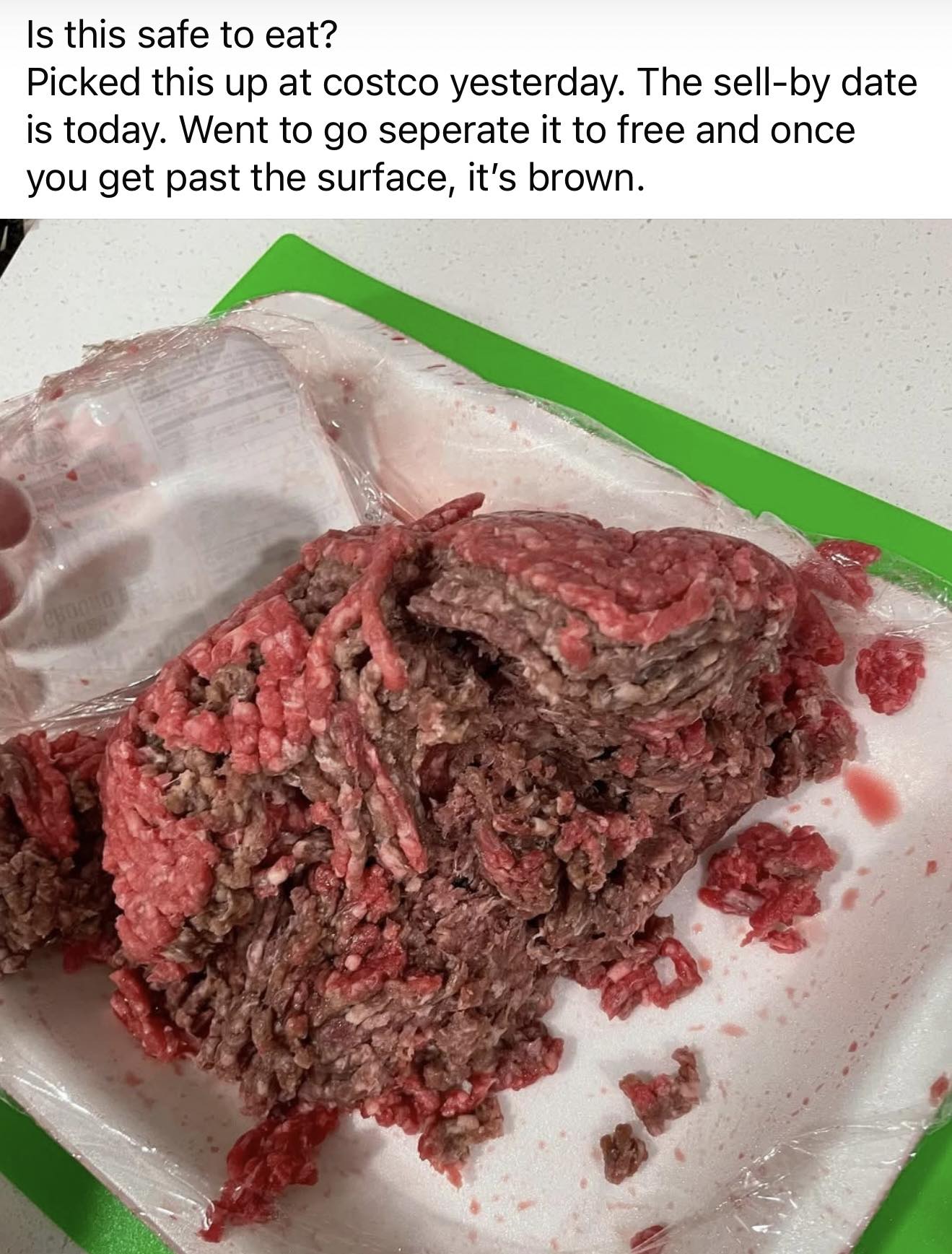
Seeing brown color inside your ground beef can be unsettling, but in most cases, it’s completely normal and caused by a lack of oxygen exposure. If you purchased the meat recently—especially from a reputable retailer like Costco—and it has been properly stored, there’s a strong chance it is still safe to eat.
The key is not to rely on color alone. Always evaluate the smell, texture, and storage conditions before making a decision. Understanding how meat behaves can help you avoid unnecessary waste while also keeping your meals safe.
When in doubt, trust your senses—but also trust the science behind food safety. With the right knowledge, you can confidently handle situations like this and make informed decisions about what goes on your plate.
Ultimately, food safety is about balancing caution with understanding. And in this case, a little brown inside your ground beef is usually nothing to worry about—as long as everything else checks out.
ADVERTISEMENT
