
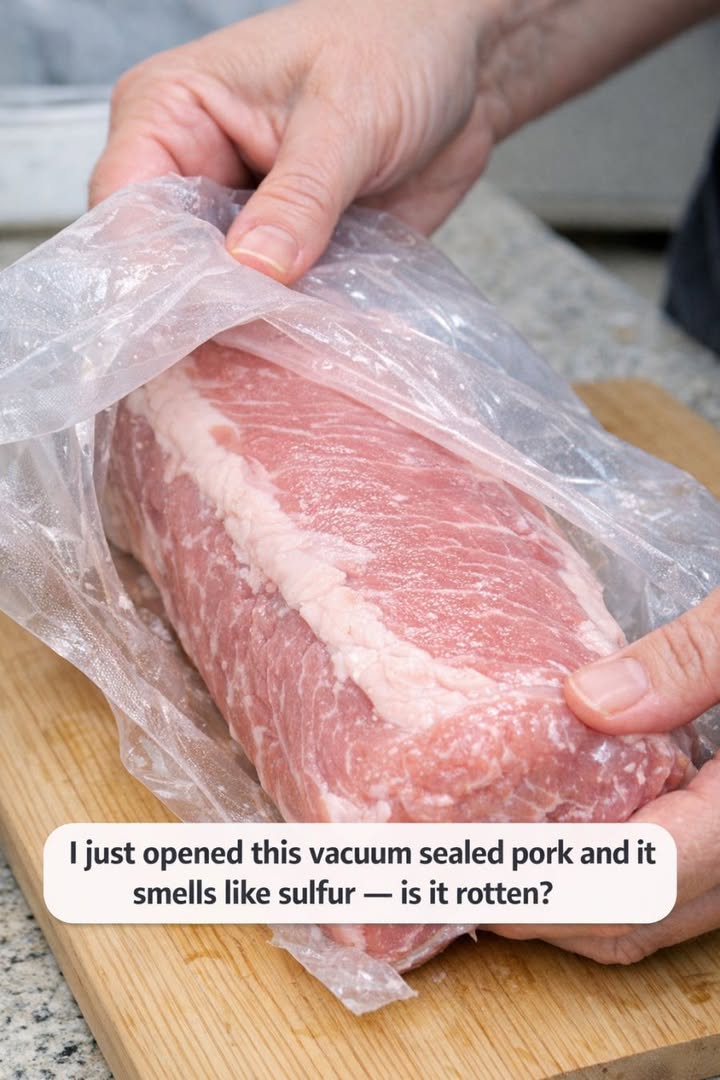
8. Common Myths About ‘Bad’ Pork Smells, Colors, And Textures
One common myth is that any strong smell indicates spoilage. As discussed, confinement odor can be strong but is not necessarily a sign of spoilage.
Another myth is that all discoloration means the meat is bad. Slight color changes can occur naturally and may not always indicate spoilage. Texture is a more reliable indicator, with sliminess being a clear sign of spoilage.
9. What Food Safety Experts Say About Sulfur Smells In Meat
Food safety experts advise that while sulfur smells can be alarming, they are often not indicative of spoilage if they dissipate quickly. The USDA explains that vacuum-sealed meats may develop odors that disappear after a few minutes.
Experts recommend using sensory evaluation—appearance, texture, and smell—to assess the meat’s safety rather than relying solely on initial odors.
10. When To Toss It And When It’s Still Safe To Cook
If the pork has been aired out and still exhibits strong, unpleasant odors, or if there are signs of spoilage such as discoloration or sliminess, it should be discarded.
If the initial odor dissipates and the pork appears fresh, it is safe to cook. Always ensure pork is cooked to an internal temperature of 145°F (63°C) to kill any potential bacteria.
11. How To Store And Thaw Pork So It Doesn’t Freak You Out Next Time
Store pork in the coldest part of the refrigerator and always maintain a temperature below 40°F (4°C). For longer storage, freeze pork in airtight packaging to prevent freezer burn.
When thawing, do so in the refrigerator or using the defrost setting on a microwave. Avoid thawing at room temperature to minimize the risk of bacterial growth. By following these steps, you can reduce the chances of encountering unpleasant odors and ensure your pork remains fresh and safe to eat.
ADVERTISEMENT
