
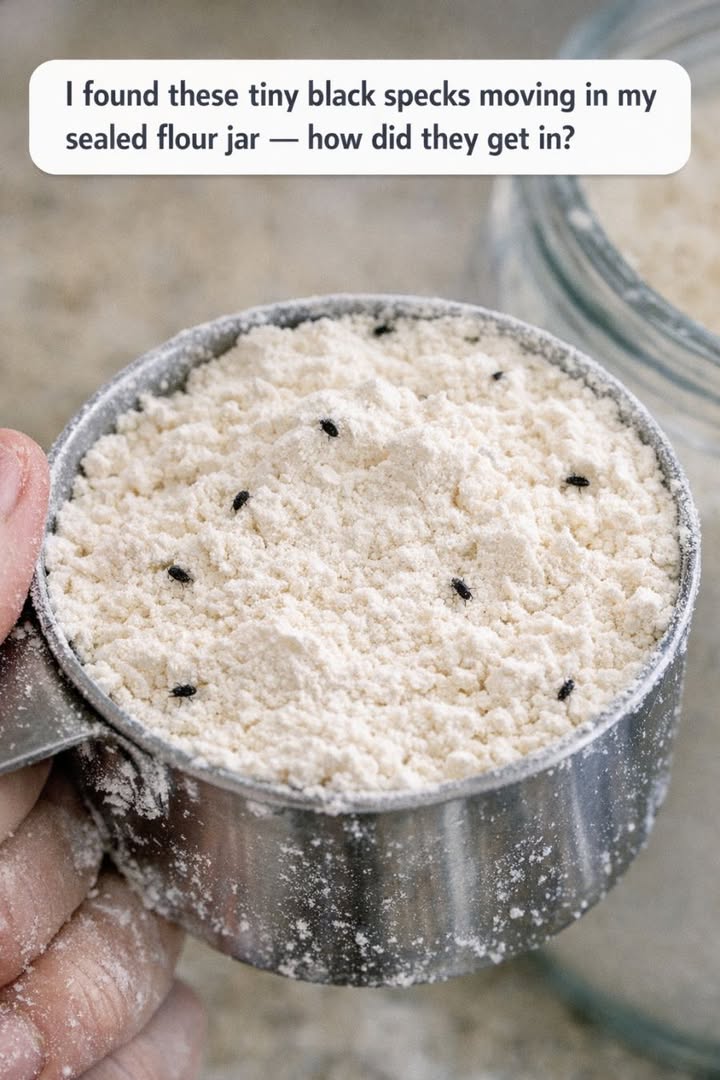
4. Why a ‘Sealed’ Jar Isn’t Always the Protection You Think
While sealing flour in a jar can help prevent new infestations, it does not address existing eggs or larvae already present in the flour. These pests are adept at surviving in low-oxygen environments, allowing them to continue their life cycle even in sealed conditions.
Moreover, some containers may not be as airtight as they appear. Tiny gaps in the lid or imperfections in the seal can allow adult weevils to enter or exit, exacerbating the problem. It’s crucial to use containers specifically designed for airtight storage when trying to protect your pantry staples.
5. Telltale Signs Your Flour Is Infested (Beyond Just Seeing Bugs)
Beyond noticing visible insects, there are several other signs that your flour may be infested with weevils. You might detect an unusual odor, as infested flour can develop a musty or sour smell. The texture of the flour may also change, becoming clumpy or containing small tunnels where larvae have been feeding.
Another indicator is the presence of fine webbing, which can be a sign of an advanced infestation. This webbing is produced by the larvae as they move through the flour. If you notice any of these signs, it’s a good idea to thoroughly inspect your pantry for other affected items and take immediate action.
6. Is It Dangerous If You’ve Already Eaten Some?
Consuming flour that contains weevils or their larvae is generally not harmful to humans. These insects do not carry diseases that affect humans, and ingesting a small number of them is unlikely to cause any health issues. However, it is understandably unappetizing and may affect the taste and quality of your food.
If you’ve consumed infested flour, there’s no need for panic. However, it’s advisable to dispose of any visibly contaminated products to prevent further spread and to maintain the quality of your meals.
7. Exactly What To Do With Contaminated Flour
If you discover that your flour is infested with weevils, the best course of action is to dispose of it immediately. Seal the contaminated flour in a bag to prevent weevils from spreading to other pantry items, and dispose of it outside your home.
After removing the contaminated flour, clean the storage container thoroughly with hot, soapy water to eliminate any remaining eggs or larvae. It’s also beneficial to inspect nearby pantry items to ensure they have not been affected, as weevils can easily spread to other food products.
For Complete Cooking STEPS Please Head On Over To Next Page Or Open button (>) and don’t forget to SHARE with your Facebook friends
ADVERTISEMENT
