
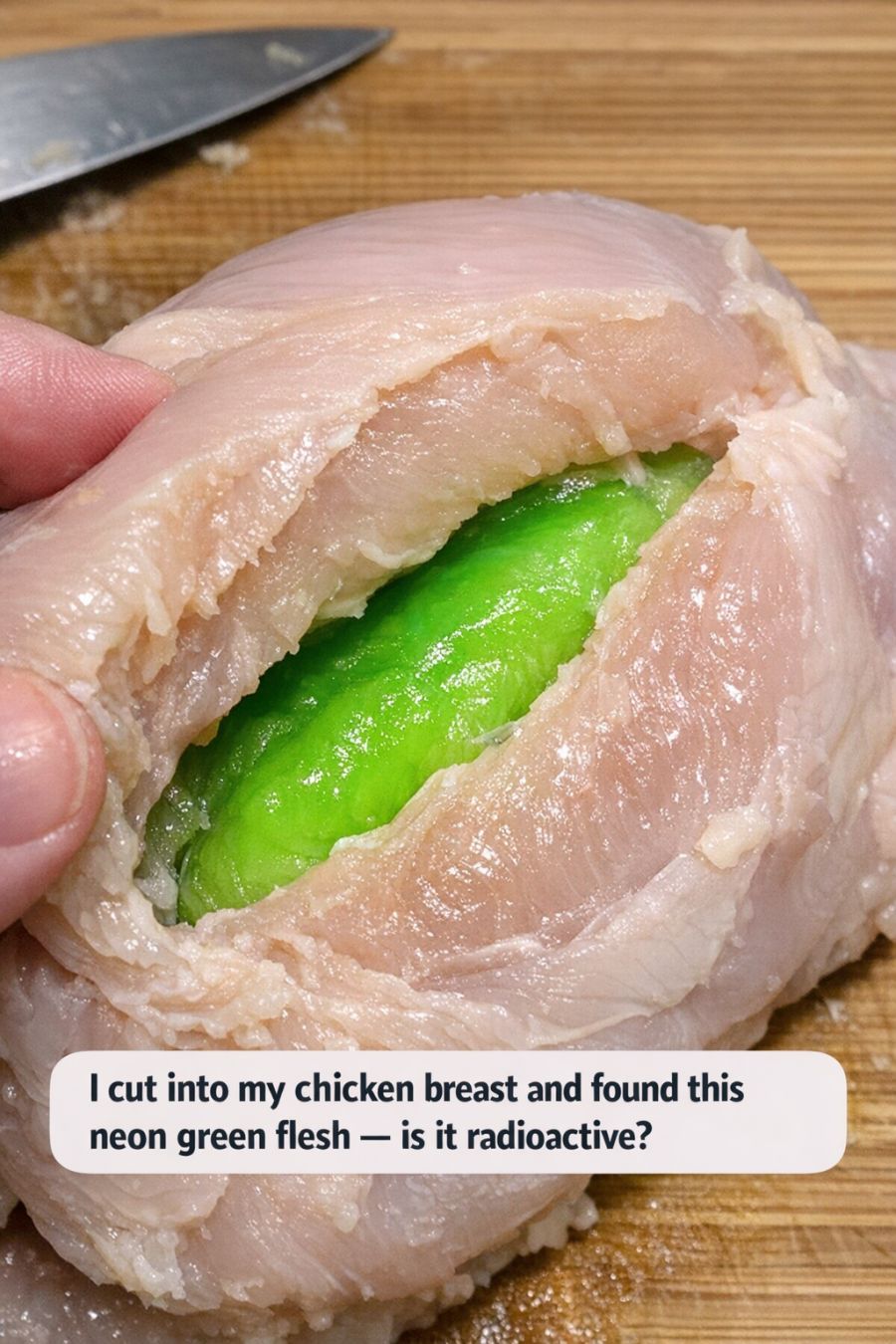
3. The Real Culprit: What Green Muscle Disease Actually Is
Green Muscle Disease, also known as Deep Pectoral Myopathy, is a muscle disorder that occurs in broiler chickens. It affects the tenderloin area of the breast, leading to muscle degeneration and subsequent green discoloration.
GMD is caused by the restricted blood flow to the muscle tissue, often as a result of the birds’ rapid growth and increased muscle mass. This lack of adequate blood supply leads to muscle necrosis, which manifests as a green color due to the breakdown of hemoglobin and other muscle components.
4. How Green Muscle Disease Develops Inside Modern Broiler Chickens
The development of Green Muscle Disease is closely linked to the modern poultry industry’s focus on producing larger and heavier birds in shorter time frames. Broilers are selectively bred to grow rapidly, emphasizing muscle mass, especially in the breast area.
As these birds grow, their muscle tissue may outpace the blood supply, resulting in ischemia or restricted blood flow. This condition is exacerbated by the birds’ limited movement in tight living spaces, which further impedes circulation and increases the risk of muscle necrosis.
5. Why The Discoloration Can Look So Bright, Dark, Or Even Neon
The intensity of the green discoloration can vary based on several factors, including the extent of muscle necrosis and the degree of hemoglobin breakdown. When muscle tissue is deprived of oxygen, it begins to break down, leading to the formation of green pigments as hemoglobin degrades.
In some cases, the color may appear more neon due to the specific wavelengths of light reflected by these pigments. The surrounding conditions, such as lighting in the kitchen or the angle at which the meat is viewed, can also affect how the color is perceived.
6. Is It Safe To Eat? What Food Scientists And Regulators Say
According to food scientists and health regulators, Green Muscle Disease does not pose a health risk to consumers. The condition affects the appearance and texture of the meat but does not introduce harmful pathogens or toxins.
However, the quality of the meat may be compromised, as the affected tissue can become tough and fibrous. While it is technically safe to eat, many consumers may prefer to avoid it due to its unappealing appearance and texture.
7. How To Spot Green Muscle Disease Before You Start Cooking
To avoid the surprise of finding green discoloration after cooking, there are some signs you can look for when handling raw chicken. Examine the meat closely for any unusual colors or patches that deviate from the typical pinkish-white hue.
If possible, choose chicken with transparent packaging that allows you to inspect the entire surface. If the meat appears unevenly colored or has areas that look bruised or discolored, it may be indicative of Green Muscle Disease.
For Complete Cooking STEPS Please Head On Over To Next Page Or Open button (>) and don’t forget to SHARE with your Facebook friends
ADVERTISEMENT
