
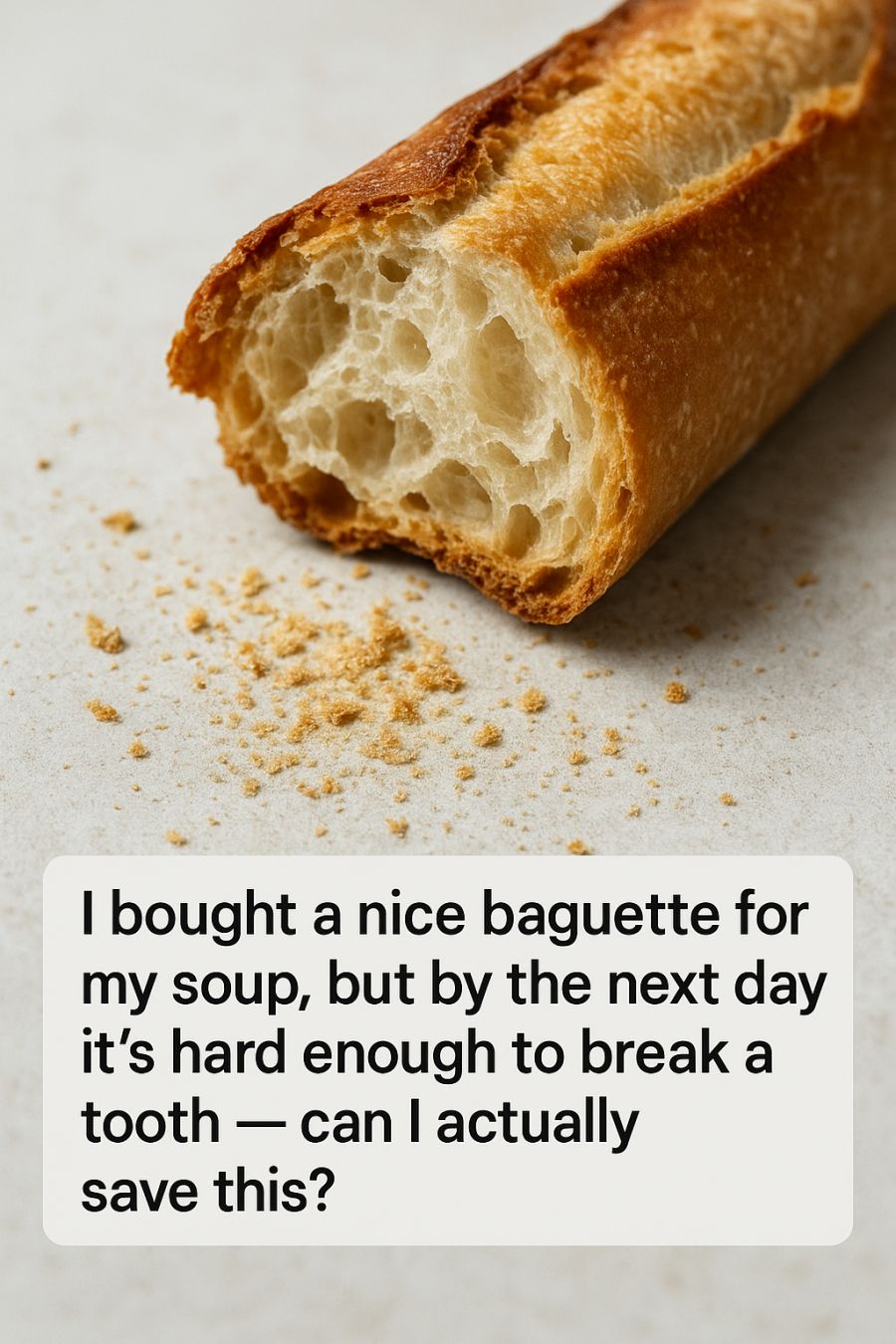
9. Freezing Fresh: How to Stop Retrograded Starch Before It Starts
To prevent a baguette from going stale, freezing is an effective method. Slice the baguette before freezing, which allows you to thaw only what you need, minimizing waste.
Wrap the slices or whole baguette tightly in plastic wrap, then place in a freezer bag. The low temperatures of the freezer slow the starch retrogradation process, preserving the bread’s texture. To refresh, thaw the bread at room temperature and finish with a brief stint in a hot oven to restore crispness.
10. Paper Bags, Bread Boxes, and the Fridge Debate: Where to Store Baguettes
Storing a baguette in a paper bag allows it to breathe slightly, maintaining its crust while slowing moisture loss. Bread boxes offer a similar environment, with the added benefit of protecting the loaf from pests.
Refrigeration is generally not recommended for baguettes, as the cold accelerates starch retrogradation. For short-term storage, a bread box or paper bag at room temperature is ideal, while longer storage should utilize freezing.
11. How Artisan vs. Supermarket Baguettes Age Differently
Artisan baguettes, typically made with fewer preservatives and a longer fermentation process, often have a more complex flavor but can go stale faster than supermarket varieties.
Supermarket baguettes may contain additional ingredients or stabilizers to extend shelf life, which can delay staling but also affect flavor and texture. Understanding these differences can help in selecting the right bread for your needs and expectations.
12. Smart Slicing: Managing Portions So Less Bread Goes Stale
Consider slicing only what you plan to consume immediately, leaving the rest of the baguette intact. This limits exposure to air and helps preserve the bread’s freshness.
For smaller households or slower consumption rates, pre-slicing and freezing individual portions can ensure that every slice is as fresh as the day it was baked, reducing waste and extending the life of your bread.
13. When to Embrace the Crumb: Breadcrumbs, Stuffing, and Other Second-Life Uses
Creating breadcrumbs from stale baguettes is a simple and effective way to reduce waste. Simply grind the stale bread in a food processor, then store in an airtight container.
Stale baguettes are also perfect for stuffing, whether in poultry or as a standalone dish. Their firmness helps them hold up to moisture, making them ideal for absorbing rich flavors. These uses turn an otherwise unsalvageable loaf into a valuable kitchen staple.
ADVERTISEMENT
