
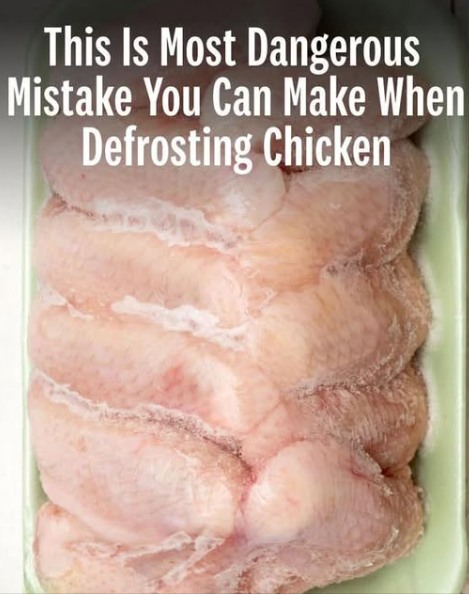
Seal the chicken in a leak-proof bag and submerge it in cold water.
Change the water every 30 minutes to keep it cold.
Smaller cuts may thaw in 1–2 hours.
This method is faster but requires attention, and the chicken should be cooked immediately afterward.
Microwave Defrosting
Use the defrost setting on your microwave only when necessary.
This method can begin cooking parts of the chicken unevenly.
For safety, it should always be followed by immediate cooking.
What You Should Never Do
Avoid these unsafe practices.
Thawing chicken on the counter.
Using hot or warm water.
Leaving chicken in the sink overnight.
Refreezing raw chicken thawed at room temperature.
These methods increase bacterial growth and can also damage the meat’s texture and quality.
Final Thoughts: Food Safety Starts Before Cooking
Defrosting chicken safely isn’t just a technical detail—it’s a key step in protecting your health and your family’s well-being.
By avoiding countertop thawing and choosing safe, recommended methods instead, you dramatically reduce the risk of foodborne illness.
A little extra time and care during defrosting can make all the difference between a healthy meal and a preventable problem.
ADVERTISEMENT
