
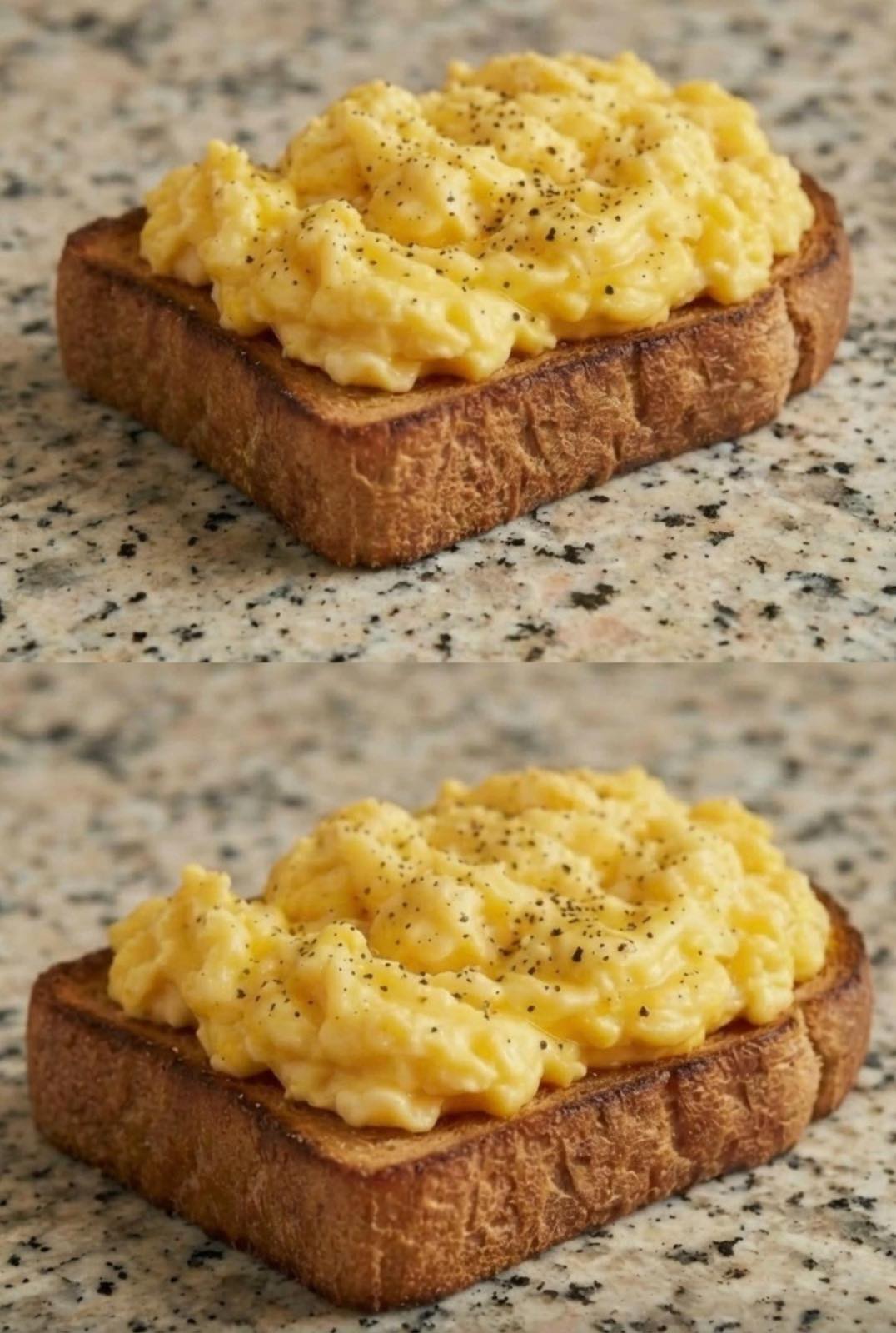
Step-by-Step Instructions (Silky, Tender, Foolproof
1. Whisk Gently
Crack eggs into a bowl. Add cream and a pinch of salt.
Whisk just until combined—no need to overbeat.
2. Melt Butter Over Low Heat
Place a nonstick skillet over low heat.
Add butter; let it melt slowly without browning.
3. Cook Slowly, Stir Constantly
Pour in eggs. Let sit 10 seconds, then stir gently with a silicone spatula or wooden spoon.
Keep stirring in slow, sweeping motions—never stop.
In 3–5 minutes, eggs will form soft, custardy curds.
4. Finish Off Heat
When eggs are almost set but still slightly runny, remove from heat.
Keep stirring 30 seconds more—the residual heat finishes cooking them perfectly.
They should look glossy and moist, not dry.
5. Serve Immediately
Plate right away (they cool fast!).
Top with chives, pepper, or a sprinkle of flaky salt.
Serving Suggestions
🍞 Classic: On buttered sourdough or toasted English muffins
🥑 Modern: With avocado slices and hot sauce
🧀 Indulgent: Fold in goat cheese or feta at the end
🥗 Light: Alongside arugula salad with lemon vinaigrette
Frequently Asked Questions
Q: Can I use milk instead of cream?
A: Yes—but cream gives the richest texture. Avoid skim milk (too watery).
Q: Why low heat?
A: High heat causes proteins to tighten too fast, squeezing out moisture → rubbery eggs.
Q: Can I add veggies?
A: Sauté onions, mushrooms, or spinach separately first—adding raw veggies cools the pan and steams the eggs.
Q: Leftovers?
A: Best eaten fresh—but if needed, reheat gently in a covered dish with a splash of milk.
❤️ The Heart of the Dish
Great scrambled eggs aren’t about fancy ingredients—they’re about patience and care. This simple act of slow cooking turns humble eggs into something deeply comforting.
So crack those shells, grab your spatula, and cook with attention. Because the best breakfasts aren’t rushed—they’re creamy, quiet, and made with love.
“Good eggs don’t need a recipe—they just need kindness, and someone hungry.” 🥚✨
ADVERTISEMENT
