
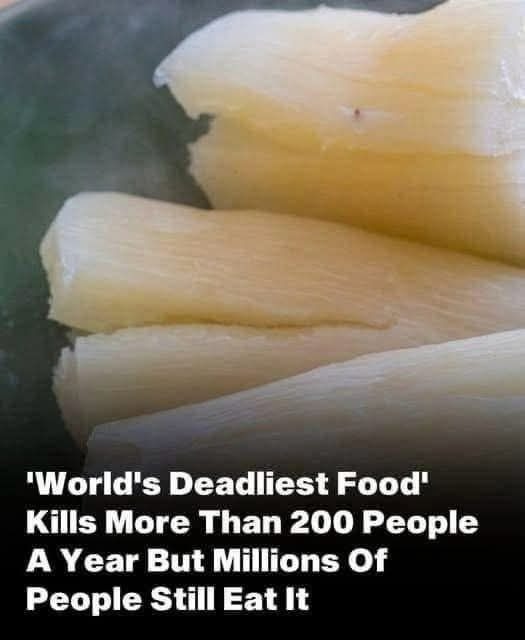
❌ Debunking the Myths
❌ “Cassava is poison”
False — only unsafe when improperly prepared
❌ “Everyone who eats cassava is at risk”
No — most use time-tested methods to make it safe
❌ “You should avoid it completely”
Unnecessary — store-bought tapioca, cassava flour, or frozen yuca is pre-processed and safe
❌ “It has no nutrition”
Wrong — it provides energy, vitamin C, manganese, and some fiber (especially in sweet varieties)
✅ Tips for Safe Consumption (Even Outside the Tropics)
If you’re buying cassava at a grocery store or using cassava-based products:
Always cook cassava before eating
Never eat raw
Buy pre-peeled, frozen, or dried versions
Already processed and safer
Ensure good ventilation when preparing large amounts
Cyanide gas can build up in enclosed spaces
Pair with protein-rich foods
Improves overall nutrition
Support sustainable cassava farming
Empowers smallholder farmers worldwide
🛒 Note: Tapioca pearls (used in bubble tea) are highly processed and safe to consume.
Final Thoughts
You don’t need to fear cassava.
But you should respect it.
Like many powerful foods — from kidney beans to fugu fish — it teaches us a simple truth:
Nature provides nourishment — but safety comes from wisdom.
So whether you’re enjoying garri in Ghana, yuca fries in Colombia, or boba tea in Bangkok…
take a moment to appreciate the knowledge passed down through generations — making one of the world’s most resilient crops not just edible, but essential.
Because real food isn’t just fuel.
It’s culture, survival, and care — rooted deep in the earth and shared across continents.
ADVERTISEMENT
