
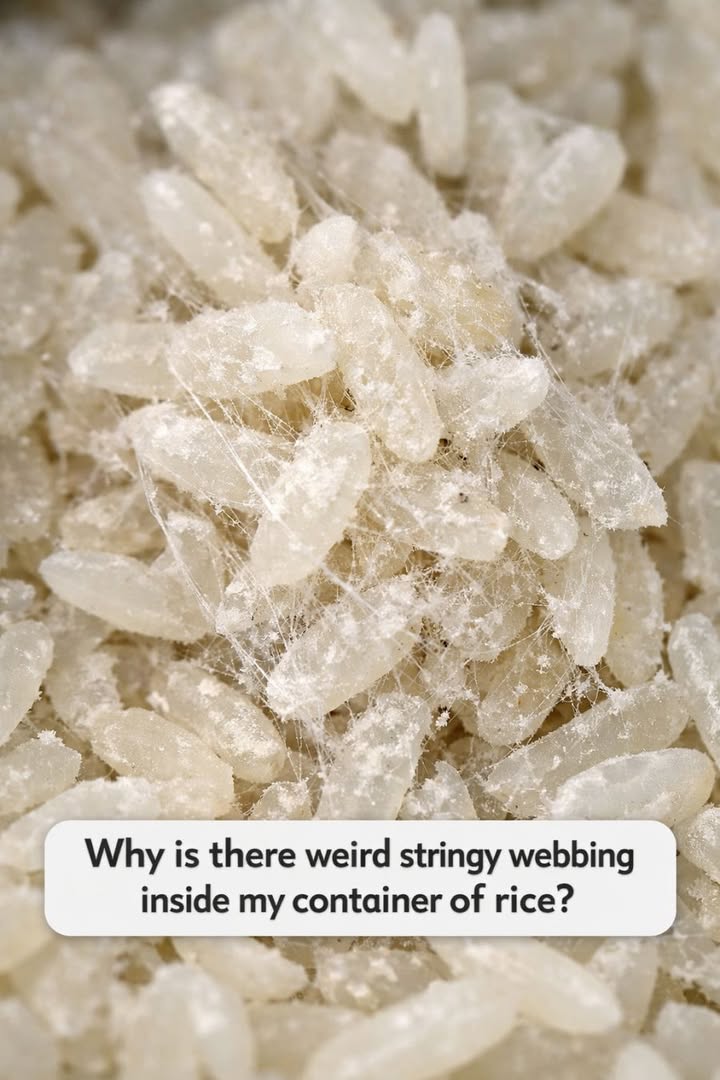
Discovering a strange, stringy webbing inside your container of rice can be an unsettling experience. Whether you’re a seasoned cook or an occasional rice eater, the sight of web-like structures in your pantry staple can raise immediate concerns about food safety and hygiene. This unwelcome surprise not only disrupts your meal planning but also prompts questions about what exactly is happening inside your rice container.
Understanding the nature of this mysterious webbing is crucial for addressing the problem effectively. The presence of such webbing typically indicates an underlying insect infestation, which is more common than one might think. By delving into the causes and solutions for this issue, you can protect your pantry and ensure your food remains safe and consumable.
1. What That Stringy Webbing in Your Rice Actually Is
The stringy webbing you see in your rice is most likely the result of a pantry pest infestation, specifically caused by the larvae of the Indian meal moth. These larvae produce silk-like threads as they feed on the rice, creating a network of webbing that can bind grains together. This webbing is not just limited to rice; it can also appear in other dry goods such as flour, cereal, and nuts.
Typically, the webbing is quite fine and may not be immediately noticeable until you scoop out a portion of rice. The webs are usually white or slightly off-white in color and can be sticky to the touch. The amount of webbing can vary, with severe infestations resulting in more extensive web networks throughout the rice.
2. Meet the Culprit: Indian Meal Moth Larvae
The Indian meal moth (Plodia interpunctella) is a common pantry pest known for its ability to infiltrate stored food products. The adult moth is relatively small, with a wingspan of about 16 to 20 millimeters, and is characterized by its distinctive gray and bronze-colored wings. However, it is the larvae that cause the most damage.
The larvae are small, cream-colored caterpillars that reach about 1/2 inch in length. They are voracious feeders and can quickly contaminate food supplies by laying eggs that hatch into more larvae. Each female moth can lay up to 400 eggs, which hatch within a few days, leading to rapid population growth if left unchecked.
3. How Indian Meal Moths Get Into Sealed Rice Containers
Indian meal moths are highly adept at infiltrating even seemingly secure food storage containers. They can enter through tiny gaps or cracks in packaging, such as inadequately sealed bags or loose container lids. The larvae can also chew through thin plastic or cardboard packaging to gain access to food.
In some cases, the infestation may originate from the manufacturer or store, as moths can lay eggs in food products before they reach your pantry. Once inside your home, they can spread rapidly from one food item to another, often unnoticed until the infestation becomes more visible.
For Complete Cooking STEPS Please Head On Over To Next Page Or Open button (>) and don’t forget to SHARE with your Facebook friends
ADVERTISEMENT
