
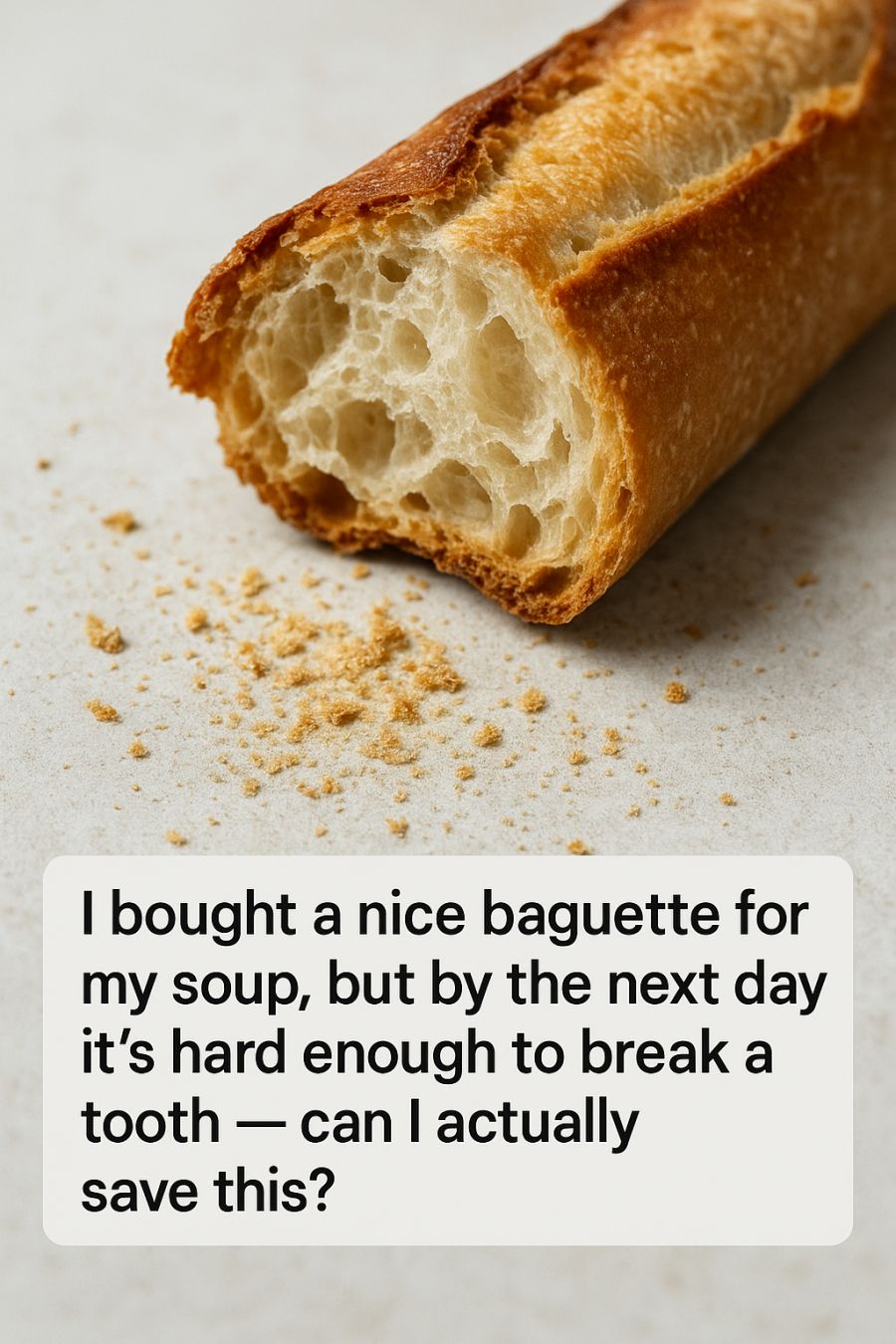
There’s nothing quite like the satisfaction of tearing into a fresh baguette to accompany a comforting bowl of soup. Crisp on the outside, soft and airy on the inside, a fresh baguette is a culinary delight. However, many of us have experienced the frustration of waking up the next day to find our once-perfect baguette has transformed into a rock-hard weapon. What happened?
Fear not, for a hardened baguette isn’t necessarily destined for the compost bin. There are several ways to salvage it and even transform it into new culinary delights. This article will explore the science behind why baguettes harden overnight, techniques to revive them, and creative ways to use a stale baguette.
1. Why Your Perfect Baguette Turns Rock-Hard Overnight
The main culprit behind your baguette’s transformation is a process known as starch retrogradation. When you bake bread, the starch inside the bread gelatinizes, which contributes to its soft texture. However, as the bread cools and sits, the starch molecules begin to recrystallize, expelling water and leading to a hard texture.
Humidity and temperature fluctuations can exacerbate this process. A baguette left out at room temperature will begin to harden within 8 to 12 hours after baking. Keeping it in a drier environment accelerates the starch retrogradation, making it even quicker to lose its moisture.
2. The Science of Retrograded Starch (And Why It Matters for Chewy Crusts)
Starch retrogradation is a natural process where gelatinized starch molecules realign and recrystallize. This process expels water, which is then absorbed by other components of the bread or evaporates, leading to staling. This is why baguettes, with their thin crust and airy crumb, can become hard and dry much faster than denser breads.
The chewy crust of a baguette is particularly susceptible to drying out. As moisture evaporates, the crust loses its pliability, and the recrystallization of the starches contributes to a brittle texture. Understanding this process is key to reversing or mitigating its effects.
3. When Is a Stale Baguette Truly “Too Far Gone” to Save?
While many methods can rejuvenate a stale baguette, there are limits to what can be done. If a baguette is not only hard but also moldy or has an off smell, it’s best to discard it. Mold can penetrate deeper than the surface, making it unsafe to consume.
However, if the baguette is merely hard but otherwise free of spoilage, it can often be revived or repurposed. The key is to catch it before it becomes too desiccated, as extreme dryness can make it difficult to restore any semblance of its former texture.
For Complete Cooking STEPS Please Head On Over To Next Page Or Open button (>) and don’t forget to SHARE with your Facebook friends
ADVERTISEMENT
