
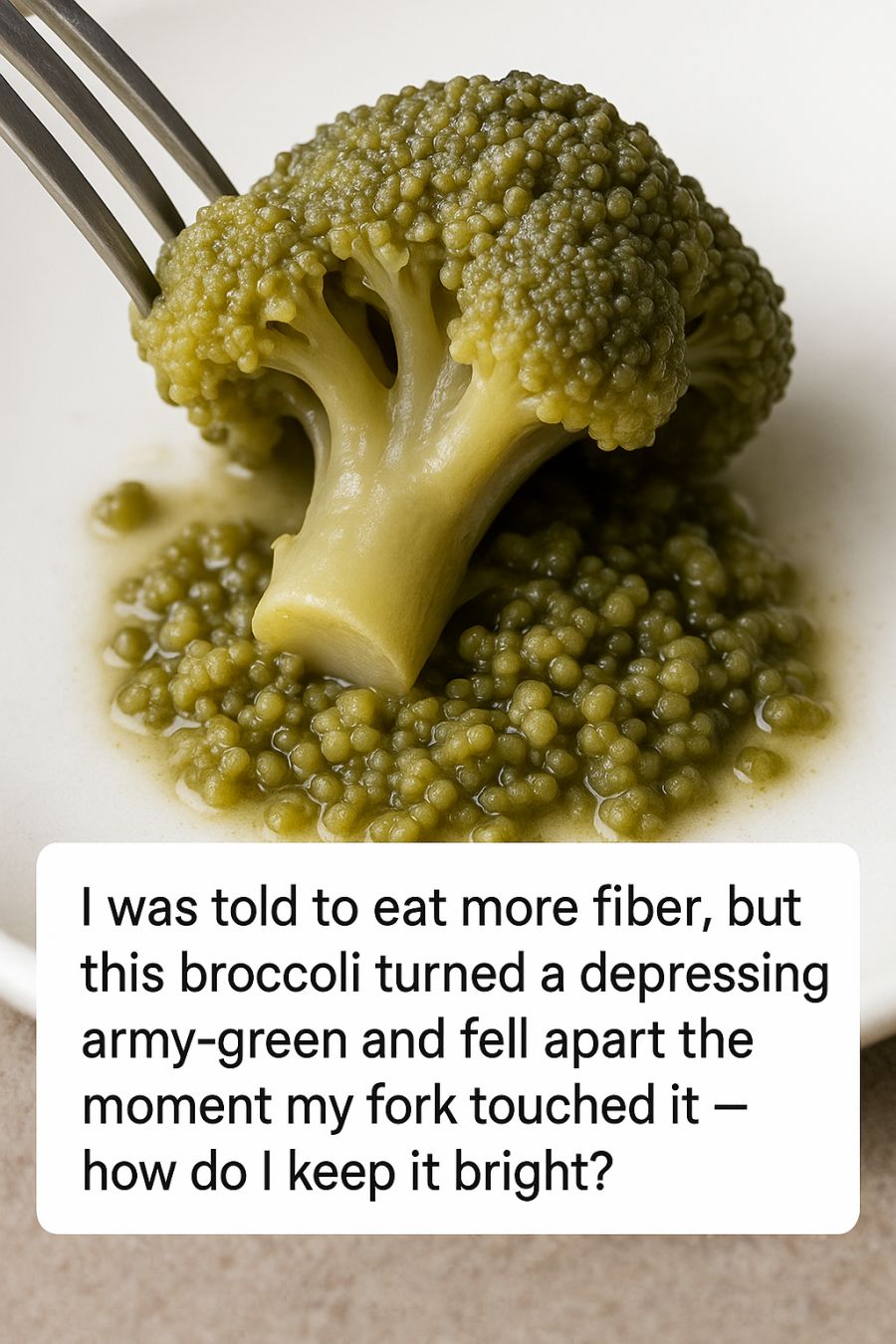
Eating more fiber is a common piece of dietary advice, often accompanied by the suggestion to incorporate more vegetables, like broccoli, into your meals. However, achieving perfectly cooked broccoli that retains its vibrant green color can be a challenge. Many home cooks find themselves confronted with broccoli that turns an unappetizing army-green and falls apart at the slightest touch, making the quest for a healthier diet seem daunting.
Luckily, maintaining the bright green color of broccoli is possible with a few simple techniques. Understanding the science behind broccoli’s transformation and employing some tried-and-true cooking methods can help you achieve delicious, aesthetically pleasing results, ensuring your fiber-rich meals are as enjoyable to eat as they are nutritious.
1. Why Your Broccoli Turns Army-Green: The Science of Chlorophyll Breakdown
Broccoli owes its appealing green hue to chlorophyll, a pigment found in plants that plays a crucial role in photosynthesis. However, when exposed to prolonged heat, chlorophyll breaks down, leading to the dull, army-green color many of us are familiar with. This breakdown is primarily due to the transformation of chlorophyll into pheophytin, which occurs when magnesium ions in chlorophyll are replaced by hydrogen ions. The result is an unappetizing color change that can make vegetables look overcooked and unappealing.
To prevent this color change, it’s essential to minimize the time broccoli spends exposed to high heat. Quick cooking methods that preserve chlorophyll can keep your broccoli looking fresh and vibrant. Additionally, understanding how temperature and acidity affect chlorophyll can help you adjust your cooking techniques accordingly.
2. The Acid–Alkaline Trap: How Water pH and Additives Change Broccoli’s Color
The pH level of the water in which you cook broccoli can significantly impact its color. Acidic environments, such as those created by adding lemon juice or vinegar, can increase the rate of chlorophyll breakdown, resulting in a duller color. Conversely, alkaline environments can help preserve the green color, but they can also negatively affect texture and flavor.
While some cooks might be tempted to add baking soda to the cooking water to create an alkaline environment, this can lead to mushy broccoli with an unpleasant taste. Instead, achieving a balance by using neutral or slightly alkaline water can help maintain color without compromising texture.
For Complete Cooking STEPS Please Head On Over To Next Page Or Open button (>) and don’t forget to SHARE with your Facebook friends
ADVERTISEMENT
